Skip to content

Best Shoe Glue for Rubber Soles – Strong & Waterproof
Compare flexible adhesives for separated soles, worn edges, and rubber shoe repairs.
- A rubber sole repair needs more than a hard bond. The adhesive must suit the shoe material, stay flexible where the shoe bends, and receive enough cure time before wear.
- Below, compare ten shoe-repair adhesives, learn when a repair is a good candidate, and follow a careful application sequence.
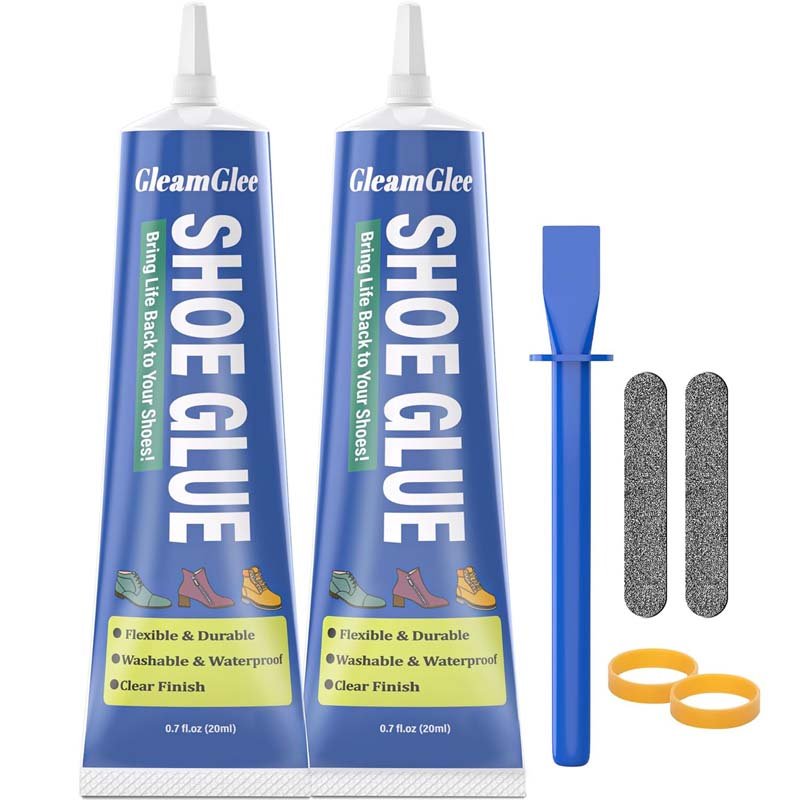
- GleamGlee Shoe Glue comes with two 20 ml tubes, a precision metal tip, two pieces of sandpaper, one applicator, and two rubber bands.
- Best for: small sole separations and localized repairs on confirmed compatible materials. Allow about 24 hours for full cure.

How We Compared Shoe Glues for Rubber Sole Repairs
The shortlist weighs material fit, flexibility, water exposure, working time, application control, and repair scale.

A glue can bond rubber and still be a poor choice for a shoe. Soles flex during every step, meet abrasion and moisture, and may combine several materials at one seam. We therefore considered whether a product is sold for footwear or only for general repairs, whether its maker describes a flexible cured bond, how the instructions handle water exposure, and how precisely a small bead can be placed.
The comparison also separates a quick grab from a completed cure. “Sets fast” does not mean the shoe is ready for walking, and a strong adhesive cannot compensate for dirt, loose fragments, a mismatched material, or an oversized gap. Follow the exact package directions for open time, pressure, ventilation, cleanup, and cure. Product formulas and instructions can change; confirm the latest label before use.
The ten entries are a useful shortlist, not a lab ranking. No shared test data was available for head-to-head peel strength, flex-cycle life, or immersion duration, so the guide avoids assigning invented scores. Pick by repair type and verified compatibility, then test a discreet area when appearance or surface finish matters.
First Diagnose the Sole Before Opening Any Adhesive
Identify where the failure starts, how far it extends, and whether the rubber and surrounding shoe structure remain sound.

Small edge lift
A short separation at the toe or outer edge is often a home-repair candidate when both surfaces are intact, cleanable, and able to meet without force. Keep the repair local and avoid filling a deep void with a thin adhesive bead.
Long separation or worn-through sole
A split running across much of the sole, missing chunks, or a worn-through tread needs more than edge bonding. Adhesive cannot restore missing rubber or rebuild a failing midsole. A cobbler can assess whether stitching, patching, or sole replacement is appropriate.
Crumbling foam or delamination
If the midsole flakes, powders, or separates in several layers, the failure may be inside the shoe material. Bonding only the outer edge can conceal rather than solve the problem. Avoid applying glue over loose or degraded material.
Check fit and safety
Do not wear footwear with an unstable sole while adhesive cures. If the shoe supports a medical need, bears heavy loads, or failure could cause a fall, seek professional repair. A repair should restore a stable bond, not merely look closed from the outside.
Six Checks Before Choosing Glue for Rubber Soles
These checks help match the adhesive to the surfaces and the demands of the repair before application begins.
- Material compatibility. Confirm the exact shoe surfaces against the package. “Rubber” covers many compounds, coatings, and sole constructions.
- Flexibility after cure. A shoe bends repeatedly. A rigid adhesive may crack or detach at a moving seam.
- Water exposure. Distinguish waterproof claims from water resistance, and follow limits on wet use and full cure.
- Gap size. A thin adhesive can bond close-fitting edges; it may not fill a wide missing section.
- Control. A fine nozzle helps place adhesive at a narrow seam and reduces excess on uppers.
- Working and cure time. Check whether the adhesive needs open time, immediate alignment, clamping, ventilation, or a long undisturbed cure.
No single label guarantees success on every rubber outsole. Surface coatings, contamination, weathering, and shoe construction all affect adhesion. If instructions do not name the material, contact the manufacturer or test a concealed spot before treating a visible seam.
Shoe Glue, Super Glue, Epoxy, or Contact Cement?
Adhesive families behave differently; use package directions and material compatibility rather than relying on a generic “strongest” claim.
| Adhesive type | Typical fit for footwear | Flex after cure | Application notes |
|---|---|---|---|
| Shoe repair adhesive | Local sole edges, heels, and footwear seams when materials are listed | Often formulated to remain flexible; confirm product label | Usually easier to control on small repairs; respect cure time |
| Cyanoacrylate / super glue | Tiny, close-fitting rigid parts | Often hard or brittle compared with shoe-repair formulas | Limited repositioning; not a default choice for a long flexing seam |
| Epoxy | Rigid repairs where the materials and geometry suit it | Commonly cures rigid; product formulas vary | Mixing and gap limits matter; may not suit a repeatedly bending sole |
| Contact cement | Broad, close-fitting surfaces with correct two-sided application | Often remains somewhat flexible; confirm model | Requires ventilation and a prescribed open time; alignment can be difficult to correct |
These are general tendencies, not guarantees for every formula. Follow the exact label, especially for rubber, coated leather, synthetic uppers, ventilation, and cure conditions.
Ten Shoe Glues to Consider for Rubber Sole Repairs
Compare each option by its strongest use case, while checking the current package for material fit and instructions.
| Product | Strong fit | Key consideration |
|---|---|---|
| GleamGlee Shoe Glue | Localized shoe repairs with a supplied repair kit | Clear-drying, flexible after cure; about 24 hours to full cure |
| Loctite Shoe Glue | Shoe-specific repairs needing a flexible bond | Confirm instructions for the exact rubber and water exposure |
| GEAR AID Aquaseal SR | Outdoor footwear and repair seams exposed to wet conditions | Allow 8–12 hours to cure as directed |
| Barge All-Purpose Cement | Experienced users bonding broad, close-fitting surfaces | Contact cement technique, ventilation, and open time matter |
| Shoe Goo II | Sole edge repairs, protection, and small wear areas | Water-resistant wording; not the same as unlimited immersion |
| Boot-Fix Shoe Glue | Quick alignment of a close-fitting sole edge | Fast grab allows little repositioning; not a gap filler |
| Angelus Clear Shoe Cement | Clear shoe repair on listed materials | Check the exact model’s water-exposure claims |
| Gorilla Clear Grip | General repairs needing a clear, flexible, waterproof adhesive | Contact-style application; allow full cure, listed as at least 24 hours |
| E6000 Industrial Adhesive | Flexible multi-purpose repair where rubber is listed | General-purpose formula; verify footwear surface suitability |
| DAP Weldwood Original Contact Cement | Broad, close-fitting contact surfaces | General contact cement; confirm model, ventilation, and surface compatibility |
Note: The list reflects use-case fit, not a measured performance ranking. Names and formulas can vary by region and product version.
Six Shoe Glue Picks for Different Repair Priorities
Start with the repair need, then verify the exact material and instructions on the package.

GleamGlee Shoe Glue — Best Complete Kit
GleamGlee suits small, localized shoe repairs when a controlled bead and basic prep accessories are useful. The kit includes two 20 ml tubes, a precision metal tip, one applicator, two pieces of sandpaper, and two rubber bands. The glue dries clear and remains flexible after curing. Confirm the surface is among the listed compatible materials, bring the edges together without a large gap, and leave the repair undisturbed for about 24 hours before wear.
Loctite Shoe Glue — Best Shoe-Specific Mainstream Option
Loctite Shoe Glue is formulated for shoe repairs and is described as bonding materials such as rubber while remaining flexible. It can suit small repairs where a footwear-oriented formula is preferred. Check the current package for instructions on surface preparation, handling, and cure, and avoid treating a general moisture-resistance statement as a promise of prolonged submersion. A stable bond still depends on clean, close-fitting edges and adequate cure time.
GEAR AID Aquaseal SR — Best Outdoor Footwear Repair
Aquaseal SR is designed for repairing footwear and is a useful candidate for outdoor shoes exposed to abrasion and wet conditions. The maker describes a flexible, waterproof repair; the stated cure window is 8–12 hours. Match the product to the shoe material and read its application directions before starting. Use enough time for the specified cure, and assess whether a damaged tread or deteriorated midsole needs a cobbler rather than an adhesive-only repair.
Barge All-Purpose Cement — Best for Experienced Contact-Cement Users
Barge All-Purpose Cement is a contact cement used for footwear and other materials. It can suit broad, close-fitting surfaces when both sides can be prepared and joined using the prescribed open time. Contact cement technique matters: once the surfaces meet, repositioning may be difficult. Read the label for ventilation, application, and material limitations. Choose a small-nozzle shoe adhesive instead when a narrow sole edge needs careful placement.
Shoe Goo II — Best for Edge Protection and Small Wear Areas
Shoe Goo II is formulated for shoe repair and can be used for sole repairs and protective coatings. Its flexible, clear finish may suit small areas where a repair also needs surface protection. The product is described as water-resistant, which should not be expanded into an unlimited waterproof or immersion promise. Apply only within the listed material and thickness directions, and allow the stated cure before walking or exposing the shoe to water.
Boot-Fix Shoe Glue — Best for Fast Alignment
Boot-Fix is positioned for footwear repairs involving rubber and vinyl, with a fast grab suited to close-fitting edges needing immediate alignment. Fast grab also reduces adjustment time, so dry-fit the parts before applying adhesive. A thin bead is more suitable than trying to fill a wide gap. Confirm the current instructions for temperature, moisture, and cure, and keep the shoe unused for the recommended period.
Four More Adhesives Worth Checking Against the Label
These options cover clear cement and general-purpose formulas; confirm footwear compatibility before use.

Angelus Clear Shoe Cement — Best Clear Shoe Cement Option
Angelus Clear Shoe Cement is a footwear-oriented cement with a clear finish, useful when visible residue is a concern. Check the specific model’s material list and water-exposure directions before choosing it for a rubber outsole. A clear adhesive can still leave a visible ridge if too much is applied. Protect the upper, use a controlled amount, and let the bond cure according to the package instead of judging readiness by surface dryness.
Gorilla Clear Grip — Best General Clear Flexible Adhesive
Gorilla Clear Grip is a general-purpose contact adhesive described as clear, flexible, and waterproof. It may be considered when the labeled materials and application method match the repair. The contact-style process can limit repositioning, so prepare and dry-fit before application. Its stated full cure is at least 24 hours; keep footwear off the floor and away from water until the maker’s directions allow use. It is not a shoe-specific formula.
E6000 Industrial Adhesive — Best Multi-Purpose Flexible Option
E6000 Industrial is a flexible multi-purpose adhesive with rubber listed among its compatible materials and waterproof positioning. It is not made exclusively for footwear, so verify the exact sole and upper materials, placement, and cure instructions. Consider whether the bead size and application style suit a narrow edge. Follow ventilation and handling directions, and do not infer a shoe-specific flex-life rating from a general-purpose product description.
DAP Weldwood Original Contact Cement — Best Broad-Surface Contact Cement
DAP Weldwood Original Contact Cement can suit broad, close-fitting surfaces when the exact product instructions support the materials involved. It is a general contact cement rather than a shoe-specific repair formula. Contact cement typically requires application to both surfaces and a wait before joining; follow the package’s exact procedure. For a small sole separation, consider whether alignment can be controlled and whether a footwear-oriented adhesive offers a simpler process.
Match the Repair Approach to the Kind of Shoe
Shoe construction changes the repair: look at the failed seam and material, not only the shoe category.
Sneakers
A small outsole edge lift on a sneaker can be a candidate for flexible shoe glue if both edges remain intact and the package lists the materials. Many sneakers combine rubber, foam, fabric, and coatings, so identify the actual surfaces at the seam. Avoid bonding across crumbling foam or filling a large missing section with a thin bead.
Boots
Boots can experience abrasion, mud, and water exposure. A close-fitting sole edge may suit a shoe repair adhesive or an outdoor footwear product with relevant claims. A detached heel block, long split, or worn tread may need a cobbler to restore safe support. Follow label directions for water exposure and allow complete cure before wearing outdoors.
Dress Shoes
Dress shoes can pair leather uppers with rubber or leather soles, often with a visible seam. Use a product listed for both bonding surfaces and protect finished leather from squeeze-out. Test a discreet area if appearance matters. A sole separated across a broad area may require professional clamping, stitching, or replacement.
Canvas and Casual Shoes
Canvas footwear may combine textile uppers with rubber foxing or soles. Use only a glue whose instructions cover the materials at the repair line. A narrow, controlled application helps prevent staining or stiff residue on fabric. If adhesive would soak into a visible textile panel, professional repair may produce a cleaner finish.
Check the Exact Materials at the Sole Separation
GleamGlee’s confirmed material list includes leather, rubber, vinyl, canvas, cotton, nylon, and suede; check the seam itself.

Rubber to rubber
For two rubber surfaces, clean away dirt and loose material, then confirm the adhesive label names the rubber type or intended footwear use. Light abrasion may help when package directions allow it. Keep the bond surfaces close together; glue is not a substitute for missing outsole material.
Rubber to leather or vinyl
Mixed-material seams need a formula approved for both sides. GleamGlee lists leather, rubber, and vinyl among compatible materials. Finished leather can stain or show adhesive squeeze-out, so apply sparingly and test a concealed spot when appearance is important.
Rubber to canvas, cotton, or nylon
Textile fibers can absorb adhesive and make cleanup harder. GleamGlee lists canvas, cotton, and nylon; use a controlled amount at the actual bonding line and keep adhesive off visible fabric. Synthetic fabrics and coatings can behave differently.
Suede and unknown synthetics
Suede is listed as compatible with GleamGlee, but a visible stain or hardened fiber may affect appearance. Protect the nap and test discreetly. Do not assume compatibility with EVA, TPU, polyester, or an unidentified foam compound; verify with the label or manufacturer before application.
Where GleamGlee Fits in a Rubber Sole Repair Kit
GleamGlee is designed for localized shoe repairs where listed material compatibility and controlled application matter.

Two tubes for repeat small repairs
The package contains two 20 ml tubes, for 40 ml total (about 1.35 fl oz). The brand positions the quantity for 20+ pairs, depending on repair size and adhesive use. A small edge lift uses less adhesive than a broad seam, so actual coverage varies with bead size and surface condition.
Controlled placement and basic preparation
A precision metal tip helps guide adhesive into a narrow seam. The kit also includes an applicator, two sandpaper pieces, and two rubber bands for preparation and temporary securing where suitable. Dry-fit first, protect nearby material, and use only the amount needed to make an even bond line.
Clear, flexible cure
GleamGlee dries clear and remains flexible after curing, with waterproof positioning. The confirmed list includes leather, rubber, vinyl, canvas, cotton, nylon, and suede. Full cure takes about 24 hours. Keep the footwear unused through the cure period and follow the label for surface preparation and application.
Apply Shoe Glue to a Rubber Sole Step by Step
Careful preparation and full cure have more influence on a durable repair than adding extra adhesive.

1. Clean and prepare
Remove dirt and loose fragments. Let surfaces dry completely. Use sandpaper only where appropriate and allowed by the adhesive instructions; avoid damaging tread or finished uppers. Protect nearby fabric and leather from accidental contact.

2. Apply a controlled bead
Use the amount and placement directed on the package. For a narrow edge, guide a thin, even bead along the bonding surface. Avoid coating the visible upper or filling a wide structural gap. Follow any specified wait time before joining.

3. Align and secure
Press the surfaces together evenly. Use suitable pressure, a rubber band, or a clamp only if appropriate for the shoe shape and product directions. Wipe away excess only by the method the maker recommends. Keep pressure even without deforming the sole.

4. Leave it to cure
Set the shoe aside in a stable, ventilated place. GleamGlee calls for about 24 hours for full cure. Do not test the bond by flexing, walking, or exposing it to water early. Other formulas have different cure schedules; use their package directions.
What Waterproof Shoe Glue Can and Cannot Promise
A waterproof claim describes the cured adhesive under specified conditions; it does not make every shoe or repair waterproof.

Water resistance depends on the adhesive, the joined materials, surface preparation, bead coverage, cure, and the path water takes through the shoe. Waterproof adhesive cannot stop water entering through stitching, worn fabric, a damaged lining, or an unbonded section.
Do not apply glue to wet or muddy surfaces unless the label explicitly permits it. Do not submerge a fresh repair or wear it in rain before the full cure. Product claims vary: Shoe Goo II is described as water-resistant, while some other products use waterproof language. Those terms should not be treated as equivalent without product-specific test conditions.
GleamGlee is positioned as waterproof after proper application and cure, but no immersion duration, pressure rating, or independent water-test result is supplied in the confirmed product facts. For repeated submersion or safety-critical footwear, follow the manufacturer’s written limits or choose professional repair.
What the Product Facts Support and What They Do Not
Clear product specifications help set expectations; unsupported lab values and invented review quotes do not.
GleamGlee’s confirmed listing facts support the following statements: two 20 ml tubes; 40 ml total; a precision metal tip; included applicator, sandpaper, and rubber bands; clear-drying adhesive; flexible bond after curing; waterproof positioning; and about 24 hours to full cure. Confirmed compatible materials are leather, rubber, vinyl, canvas, cotton, nylon, and suede. The 20+ pair quantity statement depends on repair size and adhesive use.
No verified bond-strength value, peel or shear test, flex-cycle count, immersion duration, temperature range, chemical composition, VOC figure, safety certification, or verified review excerpt was supplied. Those figures and testimonials are omitted. Add only current, traceable test results or permissioned review excerpts before publishing such claims.
Frequently Asked Questions About Shoe Glue for Rubber Soles
Get concise guidance on rubber compatibility, curing, water exposure, application, and when a repair needs professional help.
1. Does shoe glue work on rubber soles?
It can, when the adhesive lists the rubber or footwear materials and the surfaces are clean, intact, and close-fitting. Check the exact package directions.
2. What is the strongest glue for rubber to rubber?
There is no universal strongest option across rubber compounds and repair conditions. Choose a formula made for the intended materials and flex, then follow its preparation and cure instructions.
3. Is shoe glue waterproof after curing?
Some products claim waterproof performance and others claim water resistance. Follow the exact product limits; neither term guarantees the entire shoe will resist immersion.
4. Do I need sandpaper before applying shoe glue?
Use sandpaper only when the adhesive directions allow abrasion for the specific surface. Remove dust before bonding, and avoid damaging tread or finished uppers.
5. How long should shoe glue cure before wearing shoes?
Use the package cure schedule. GleamGlee calls for about 24 hours for full cure; other formulas differ. A quick grab is not full cure.
6. Can shoe glue fill a wide gap or crumbling midsole?
A narrow bead is intended for close-fitting surfaces. Missing rubber, a large void, or crumbling foam may need a patch, replacement, or cobbler repair.
7. Can I use super glue on a flexible shoe sole?
It is not the default choice for a long flexing seam. Many super glues cure rigidly and offer little repositioning time. Check the exact formula and shoe materials.
8. Which materials are confirmed for GleamGlee Shoe Glue?
The confirmed list is leather, rubber, vinyl, canvas, cotton, nylon, and suede. Verify other materials, including EVA and TPU, before use.
9. How many pairs can one GleamGlee kit repair?
The brand positions 40 ml total for 20+ pairs, depending on repair size and adhesive use. Large seams consume more glue than small edge lifts.
10. Where can I buy GleamGlee Shoe Glue?
GleamGlee Shoe Glue is available through the GleamGlee Amazon listing. Check the listing for current availability, package details, and instructions.
Ready to Repair a Small Rubber Sole Separation?
Check compatibility, prepare the seam, and allow the full cure before returning footwear to use.
GleamGlee Shoe Glue includes two 20 ml tubes and a compact repair kit for localized shoe fixes. Its clear-drying, flexible bond and precision metal tip suit controlled application on confirmed compatible materials. Full cure takes about 24 hours. For a small edge lift with intact surfaces, review the package instructions and current Amazon listing before starting.