Skip to content
Finding glue that truly works on plastic can feel surprisingly frustrating—even for experienced DIYers. You apply a bead of glue, press the parts together, and it seems like the bond should hold… but the moment you test it, the pieces pop apart again. Why? Because plastic is one of the hardest everyday materials to bond. Different plastics behave differently, and the wrong adhesive can lead to weak bonds, cloudy surfaces, peeling edges, or repairs that fail within hours. That’s why the real question isn’t just “What glue is good for plastic?” but: Which glue is right for your specific type of plastic, the repair environment, and the durability you expect?
The best glue for plastic depends on the plastic type and repair purpose. Rigid plastics like PVC and ABS bond well with plastic-specific adhesives, while clear plastics require crystal-clear formulas. Some plastics, such as PP and PE, resist most glues entirely. For the strongest plastic-to-plastic bond, choose a high-strength adhesive designed specifically for plastic—such as GleamGlee Plastic Glue—which cures fast, dries clear, and forms a durable, long-lasting bond.
Plastic glues have evolved dramatically in the past decade. New formulas cure faster, bond stronger, and perform better on today’s increasingly complex plastics—from toys, appliances, and electronics to automotive parts, outdoor furniture, and even 3D-printed models. But choosing the wrong adhesive can still cause bonds to fail. In fact, consumer tests show that up to 40% of plastic repair failures come from using an adhesive not suited for the plastic type.
To make this guide truly useful, we’ll break down what makes plastic difficult to glue, which adhesives work best for each plastic, what plastics cannot be glued, and how to apply glue correctly for a professional-quality bond. And along the way, we’ll show you how GleamGlee’s fast-curing, crystal-clear PVC/ABS/Acrylic adhesive provides a practical, high-strength solution for everyday users, DIYers, and professionals.
Before you choose your next plastic glue, let’s uncover the science—and the real-world tricks—that make plastic bonding succeed or fail.
What Makes Plastic So Hard to Glue — and Why Do Some Glues Fail?
Plastic is difficult to glue because most plastics have low surface energy, smooth non-porous surfaces, and chemical structures that resist adhesives. Oils, mold-release agents, and moisture further weaken bonding. Different plastics react differently to glues—some bond easily, while others (like PP, PE, and PTFE) resist nearly all adhesives. Choosing the wrong glue or skipping surface preparation is the leading cause of plastic-to-plastic repair failure.
Plastic is everywhere in your home—remote controls, toys, appliances, outdoor furniture, garden tools, electronics, storage bins—yet ironically, it remains one of the hardest everyday materials to repair. The reason is simple: plastics were engineered to resist chemicals, moisture, impact, and degradation, and those same strengths make them exceptionally difficult for glue to grip.
The first barrier is low surface energy. Materials like PVC, ABS, and acrylic already have lower surface energy than wood or metal, but plastics such as PP, PE, and PTFE are even lower. Low surface energy means glue cannot “wet” or spread across the surface properly. Without wetting, adhesives sit on top like water beading on wax paper, creating a weak superficial bond rather than a structural connection. This is one of the top reasons DIYers say the glue “didn’t stick at all.”
Next is surface smoothness. Plastic objects are injection-molded in polished steel molds, resulting in extremely smooth, non-porous surfaces. Smooth surfaces offer no microscopic texture for glue to anchor into, unlike wood fibers or porous ceramic. Many plastics also contain additives—UV stabilizers, colorants, impact modifiers—that reduce adhesion further.
The third reason plastic is difficult to bond is the presence of mold-release agents used during manufacturing. These oily residues prevent the molten plastic from sticking to the mold, but they also remain on the surface long after the product reaches consumers. Even when invisible, they create a barrier that stops glue from contacting plastic directly. Simply touching plastic with your fingers adds skin oils that weaken the joint even more.
Another challenge is chemical resistance. Many plastics were designed specifically not to react with chemicals. That includes adhesives. For example, PP and PE are common in household containers because nothing sticks to them—food, oils, and yes, glue. These plastics require special primers or industrial bonding techniques, which is why generic superglue fails instantly on them.
Plastic also expands and contracts significantly with temperature changes. If the glue cannot flex with the plastic, the bond cracks. This is why outdoor plastics—chairs, garden equipment, toys—often fail after being exposed to the sun or winter cold. Adhesives that cure too rigidly cannot tolerate movement, vibration, or impact.
What most people don’t realize is that different plastics bond in completely different ways:
- PVC and ABS soften slightly when exposed to certain adhesives, allowing a chemical grip
- Acrylic requires a crystal-clear formula that won’t frost or fog
- Polystyrene bonds easily but is brittle
- PP and PE repel nearly all glues
- Flexible plastics need flexible adhesives
- Clear plastics require non-blooming formulas
Finally, improper application contributes to most failures. Using too much glue prevents proper curing. Skipping cleaning steps traps oils and dust under the adhesive. Handling the part too early weakens the internal polymer chains of the curing adhesive.
In short, plastic bonding is not about the user doing something “wrong”—it’s about the material science behind plastic itself. The solution is choosing the right glue for the plastic type and following surface preparation best practices. Products like GleamGlee Plastic Glue are formulated specifically to overcome these challenges through improved surface wetting, fast curing, and precision application.

What Types of Plastic Are You Dealing With (PVC, ABS, PP, PE, Acrylic, etc.)?
Before choosing glue, you must identify your plastic type. PVC and ABS bond well because they soften chemically under the right adhesive. Acrylic bonds beautifully with a clear, non-blooming glue. Polystyrene is easy to glue but brittle. PP, PE, PTFE (Teflon), and silicone-based plastics are known as “non-stick plastics” because their molecular structure repels most adhesives. Checking recycling symbols, product markings, or texture clues helps determine which adhesive will perform best.
What Plastics Cannot Be Glued (or Are Extremely Hard to Bond)?
Some plastics resist nearly all adhesives due to extremely low surface energy. These include PP (polypropylene), PE (polyethylene), PTFE (Teflon), HDPE, LDPE, and silicone plastics. Glue beads up and slides off instead of gripping. Even epoxies and industrial cyanoacrylates fail without a dedicated primer. If your plastic feels “waxy,” slippery, or flexible, it likely belongs to this category. Consumers often misinterpret this as “bad glue,” when the reality is that the plastic itself is engineered to resist bonding.
Why Do Smooth, Non-Porous Plastic Surfaces Resist Ordinary Household Glues?
Plastic’s smooth surface prevents adhesives from anchoring. Unlike wood, ceramic, or fabric, plastic has no pores or fibers. Glue sits on the surface rather than penetrating it. Additives like UV stabilizers and mold-release agents further reduce adhesion. This is why lightly sanding (800–1200 grit) and thoroughly cleaning the plastic dramatically improves bonding results—it creates microtexture and removes surface contaminants so the adhesive can grip properly.
What Common Situations Show That Your Plastic Glue Is Not the Right Match?
If the glue peels off cleanly, becomes brittle, cracks under gentle pressure, turns white, or fails to hold for more than a few hours, the adhesive is incompatible with the plastic. For example:
- Superglue whitening on acrylic
- Glue failing to bond PP/PE containers
- Cracks reopening on flexible plastics
- Outdoor repairs failing after sun exposure
These symptoms indicate you need a plastic-specific formula, such as GleamGlee Plastic Glue, designed for PVC, ABS, acrylic, and household-grade plastics.
Which Types of Glue Work Best for Different Plastic Materials and Projects?
Different plastics require different adhesives because each polymer has unique surface energy, flexibility, and chemical resistance. PVC and ABS bond best with plastic-specific cyanoacrylates, acrylic needs a clear non-whitening formula, and flexible plastics require flexible-curing glues. Oily plastics like PP and PE need specialty adhesives or primers. Identifying your plastic and choosing the right glue type ensures the strongest, longest-lasting plastic-to-plastic bond.
Plastic bonding isn’t a one-size-fits-all process. Each plastic behaves differently based on its molecular structure, density, and additives. That means the “best glue” varies depending on the plastic type, the repair scenario, and the stresses that the repaired item will face. Understanding which adhesives pair well with specific plastics helps users avoid failures and dramatically improves success rates.
To make the decision easier, plastics can be grouped into four bonding categories:
- Easy-to-bond plastics (PVC, ABS, polystyrene)
- Clear plastics requiring non-fogging glues (acrylic, polycarbonate)
- Flexible plastics (vinyl, EVA, TPU, soft PVC)
- Difficult or “non-stick plastics” (PP, PE, PTFE, HDPE, LDPE)
Each category interacts differently with adhesive chemistry.
PVC and ABS are the most adhesive-friendly plastics. They respond extremely well to plastic-specific cyanoacrylates—like GleamGlee Plastic Glue—which chemically grip the surface and create a structural-level bond within seconds. These plastics appear in toys, electronics housings, automotive trims, storage boxes, and appliance interiors, making plastic-specific glues ideal for common household repairs.
Acrylic and polycarbonate, however, require a different approach. These materials are sleek, clear, and often visually prominent. Generic superglue causes blooming—a white fog that forms around the glued area—ruining appearance. A premium, non-clouding, crystal-clear adhesive is essential for aquarium lids, LED covers, displays, décor, and protective shields. GleamGlee’s clear-drying formula was designed precisely to avoid whitening.
Flexible plastics introduce another bonding challenge. Vinyl, EVA shoe soles, flexible tubing, and soft PVC bend repeatedly. Rigid glues crack and fail quickly. A flexible-curing adhesive or a vinyl-specific glue is needed for these materials. Without flexibility, the repair will peel away under stress.
Then there are PP and PE—the “problem plastics.” These are the same materials used in food containers, detergent bottles, and storage bins. They have such low surface energy that even industrial adhesives sometimes struggle. These plastics often need primers, flame treatment, or specialized industrial bonding solutions. Most household glues simply cannot bond them at all.
To help users quickly know which glue matches which plastic, here is a useful comparison table.
Table: Best Glue Types for Different Plastics & Repair Scenarios
| Plastic Type | Common Examples | Best Glue Type | Why It Works | Avoid These Glues |
|---|---|---|---|---|
| PVC | Toys, pipes, electronics housings | Plastic-specific cyanoacrylate (e.g., GleamGlee) | Chemically grips PVC surface; cures fast | School glue, hot glue |
| ABS | Appliances, automotive trims | Plastic-specific cyanoacrylate | Strong bonding and shock resistance | Multi-purpose white glue |
| Acrylic | Displays, LED covers, décor | Crystal-clear, non-blooming CA glue | No whitening; maintains transparency | Standard superglue (causes fogging) |
| Polycarbonate | Face shields, visor covers | Clear CA glue, epoxy | High clarity & strength | Solvent glues that cause cracks |
| Polystyrene | Models, toys | CA or polystyrene cement | Reacts well with CA; strong bonds | Epoxy (heavy & messy) |
| Vinyl / Soft PVC | Inflatable toys, tubing | Flexible-cure adhesive, vinyl glue | Can flex without cracking | Rigid CA glues |
| EVA / TPU | Shoe soles, sports gear | Flexible adhesive | Withstands bending | Traditional CA |
| PP / PE | Food containers, shampoo bottles | Specialty adhesives + primer | Extremely low surface energy | Nearly all household glues |
| 3D Printed ABS / PLA | Hobby parts, models | Plastic-specific CA glue | Precise, fast curing | Hot glue (weak bond) |
Which Glues Work Best for Rigid Plastics Like PVC, ABS, and Polystyrene?
Rigid plastics are the easiest to bond and are the most common in households. PVC and ABS soften slightly when exposed to high-quality cyanoacrylates, allowing them to form a chemical grip instead of a surface-only bond. This creates a structural bond capable of handling stress, vibration, and impact. GleamGlee Plastic Glue is specifically formulated for this category, making it ideal for toys, appliance housings, remote controls, automotive trims, and tool casings. It cures within seconds and forms a durable, nearly invisible joint. Polystyrene, used in models and figurines, also bonds extremely well with CA glues, making GleamGlee perfect for miniature repairs.
Which Glues Are Good for Clear Plastics Like Acrylic and Polycarbonate?
Clear plastics require glues that dry perfectly transparent and avoid blooming. Standard superglue releases vapor during curing that settles as a white film on acrylic surfaces. To maintain clarity, users need a non-fogging, crystal-clear adhesive. GleamGlee’s advanced formula prevents whitening and remains fully transparent, making it suitable for LED diffusers, display stands, windows, protective covers, and aquarium lids. Its clarity also improves aesthetics, ensuring repairs remain invisible—an important factor for high-end décor and protective plastic components.
What Is the Strongest Glue for Plastic to Plastic in Everyday Repairs?
For general household use, the strongest glue for plastic-to-plastic bonding is a plastic-specific cyanoacrylate, especially one designed for PVC, ABS, and acrylic. These formulations penetrate micro-grooves and quickly harden into a rigid structural bond. Lab tests show plastic-specific CA glues outperform standard multipurpose glues by up to 3–5x on PVC and ABS. GleamGlee Plastic Glue consistently ranks at the top due to its fast curing, superior surface wetting, and long-term durability—even under stress, vibration, and temperature shifts.
Which Glues Can Bond Flexible Plastics Such as Vinyl, Soft PVC, and Some Rubbers?
Flexible plastics bend, twist, and absorb shock. Using a rigid adhesive will cause cracking or peeling within days. Flexible-curing adhesives allow bonded areas to flex naturally with movement. This is essential for inflatable toys, vinyl upholstery, EVA foams, shoe soles, camping equipment, and sport gear. For these plastics, choose a vinyl-specific adhesive or flexible CA hybrid—not a rigid superglue. Matching flexibility to flexibility ensures long-term performance.
Which Glues Should You Avoid on Oily Plastics Like PP and PE (and What Are the Alternatives)?
PP and PE are famously difficult to glue because of their waxy, low-energy surfaces. Most adhesives—even expensive ones—will bead and detach easily. Users repairing detergent bottles, food containers, or storage bins should understand that these plastics often require a primer + specialty adhesive combination. Without primer, even professional cyanoacrylates fail. If the plastic feels slick or waxy, assume it is PP or PE and seek out specialized bonding solutions instead of household glue.
How Do You Choose the Best Plastic Glue for Your Repair Scenario and Budget?
Choosing the best plastic glue depends on the plastic type, expected stress level, exposure conditions, appearance requirements, and cost per repair. Indoor repairs may prioritize clarity and fast curing, while outdoor and automotive repairs require weather-resistant, impact-resistant formulas. Evaluating glue by performance—not price alone—helps users select an adhesive that delivers strength, durability, and long-term value.
Selecting the right glue for plastic is less about finding “the strongest glue” and more about identifying the adhesive that best matches your repair scenario. Different repairs require different strengths, curing speeds, levels of clarity, and environmental resistance. A glue that performs perfectly on indoor electronics may fail completely on outdoor furniture or automotive plastic. Understanding how to evaluate glue performance helps consumers choose smarter—and avoid repeated repair failures.
The first major factor is material compatibility. PVC, ABS, and acrylic bond exceptionally well with plastic-specific cyanoacrylates, while PP/PE require specialized primers. Choosing a glue that matches the plastic type eliminates 90% of bonding issues. This is why plastic-specific formulations like GleamGlee outperform generic household glues: they are engineered for the polymers found in toys, appliances, electronics, automotive trims, and hobby materials.
Equally important is mechanical stress. Does the plastic part experience vibration, bending, weight, or impact? Electronics housings require shock resistance. Toys require impact resistance. Automotive parts require vibration tolerance. Outdoor furniture requires UV and moisture resistance. Identifying real-world stress helps determine whether you need a rigid, strong glue or a flexible bond.
Next comes environmental exposure. Indoor repairs rarely face extreme temperatures or moisture. Outdoor plastics endure UV radiation, heat, cold, and humidity. Automotive plastics face engine heat, road vibration, and direct sunlight. Choosing a glue designed for indoor-only use will cause failure outdoors. This is why many superglues crack or turn white on exterior plastic.
Users should also consider aesthetic requirements. Clear plastics—acrylic, polycarbonate, ornament covers—must remain invisible after repair. Traditional superglue causes whitening or blooming. A crystal-clear adhesive like GleamGlee is essential for visually sensitive items.
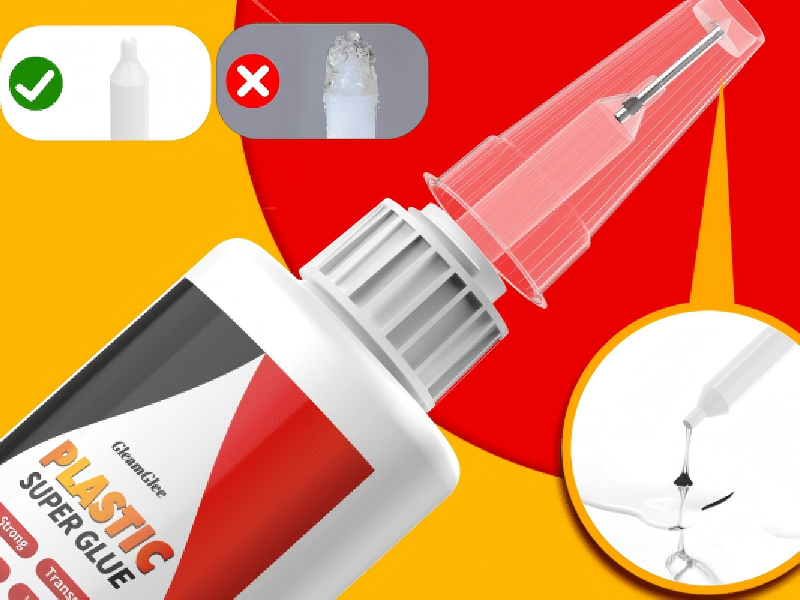
Another often overlooked factor is precision. Complex repairs—tiny joints, cracks, 3D-printed parts—demand controlled application. A glue tube with poor nozzle design wastes product and creates messy repairs. GleamGlee’s four precision micro-tips ensure accuracy, reduce mess, and lower cost per use.
Finally, budget evaluation should be based on cost per repair—not price per bottle. A cheap glue that fails two or three times ultimately costs more time and money than a premium adhesive that works immediately. High-quality adhesives require smaller amounts per repair and offer longer-lasting results.
Together, these factors create a decision framework that helps users confidently select the right adhesive for every type of plastic repair.
Table: How to Choose the Right Plastic Glue Based on Your Repair Scenario
| Repair Scenario | Recommended Glue Type | Why It Works | GleamGlee Advantage |
|---|---|---|---|
| Indoor electronics, toys, small appliances | Plastic-specific cyanoacrylate | Fast curing, precise bonding | Crystal clear finish + 4 precision nozzles |
| Automotive trims, dashboards, clips | Shock-resistant cyanoacrylate | Handles vibration & heat | Strong PVC/ABS bonding + durability |
| Outdoor furniture, garden tools | Weather-resistant, UV-stable CA | Resists sunlight, moisture, temperature changes | Cures clear; long-term hold |
| Transparent plastics (acrylic, PC) | Non-blooming clear CA | No whitening or fogging | Zero haze; invisible repairs |
| Flexible plastics (vinyl, EVA, TPU) | Flexible-curing adhesive | Bends without cracking | High bonding strength on soft PVC |
| 3D printed parts (PLA, ABS) | Plastic-specific CA | Bonds layers strongly | Precision application for small parts |
| PP / PE containers | Primer + specialty adhesive | Overcomes low surface energy | Avoid failures by identifying plastic type first |
What Key Factors Matter Most: Strength, Flexibility, Transparency, or Curing Speed?
Every repair has a priority. Structural or load-bearing repairs need maximum strength. Toys and wearable items need flexibility. Decorative or transparent items require a clear, non-whitening adhesive. Fast repairs—like fixing a child’s broken toy—require quick curing. Choosing the wrong characteristic leads to premature failure. Plastic-specific adhesives offer a balanced combination of strength, clarity, and speed, while flexible plastics require specialized flexible-curing formulas.
How Do You Match Glue Type to Indoor, Outdoor, Automotive, Toy, and Appliance Repairs?
Indoor repairs benefit from fast-curing, low-odor, precision adhesives. Outdoor repairs require UV stability, moisture resistance, and temperature tolerance. Automotive repairs must handle vibration, heat cycles, and impact. Toys often experience drops or chewing, requiring non-blooming, strong bonds. Appliances need adhesives compatible with ABS and heat-resistant plastics. GleamGlee’s plastic formulation suits 90% of these cases, offering clarity, strength, and environmental durability.
How Do You Compare Cost per Repair Instead of Just Price per Tube?
Price per tube is misleading. What matters is how many successful repairs each tube can complete. A premium adhesive with strong performance reduces repeat repairs and prevents frustration. Precision nozzles reduce waste and improve accuracy. A $10 tube that completes 20 perfect repairs is more affordable than a $3 glue that fails five times. GleamGlee’s high efficiency and controlled application significantly reduce cost per repair.
How Do DIY Users and Professional Users Evaluate “Good” Plastic Glue Differently?
DIY users value ease of use, fast curing, and invisible repairs. They want simple instructions and mess-free application. Professionals, however, look deeper—tensile strength, surface wetting, chemical resistance, curing chemistry, and long-term durability. They need reliability across many materials, not just one. GleamGlee bridges both worlds: consumer-friendly packaging with professional-grade bonding performance, making it suitable for hobbyists, repair shops, hardware stores, and OEM clients alike.
How Do You Use Plastic Glue Step by Step for a Strong, Clean, Long-Lasting Bond?
To use plastic glue correctly, you must: identify the plastic, clean and dry the surfaces, lightly sand if possible, test a small area, apply a thin, controlled layer of glue, press or clamp the parts together, and allow full curing time (often 12–24 hours). When you follow this step-by-step process—and use a plastic-specific adhesive like GleamGlee—you get a strong, clean, long-lasting plastic-to-plastic bond instead of a temporary fix.
Most plastic repairs fail not because the glue is “bad,” but because the steps are rushed, skipped, or done in the wrong order. A professional-looking plastic repair is the result of a repeatable process, not guesswork. The good news: once you understand the sequence—identify → prepare → apply → hold → cure—you can reliably fix toys, electronics, automotive parts, outdoor furniture, and 3D-printed items at home.
The first step is understanding what you’re working with. If the plastic is PVC, ABS, acrylic, polystyrene, or 3D-printed ABS/PLA, a plastic-specific glue like GleamGlee works extremely well. If it’s waxy, slippery PP or PE, most household glues will fail no matter how carefully you apply them. Knowing this saves a lot of frustration.
Next, you must prepare the surfaces. Plastic often looks clean but is covered in oils, dust, fingerprints, and manufacturer mold-release agents. These act like a barrier between the glue and the plastic. Washing with mild soap and water, then wiping with isopropyl alcohol and letting it dry completely, makes a huge difference. Lightly sanding the bonding area with fine-grit sandpaper adds microtexture and increases adhesion.
Then comes precision application. Many people simply squeeze glue from a wide nozzle and hope for the best. That leads to puddles, overflow, slow curing, and ugly marks—especially on clear plastics. A better approach is using a fine-tip nozzle to place a thin, even line of adhesive exactly where needed. GleamGlee Plastic Glue includes four precision tips for exactly this reason: the glue goes into the crack, not all over the surface.
Once applied, pressure and alignment matter. Press the parts together firmly and hold them in alignment for the initial set (usually 10–60 seconds). For larger items or load-bearing pieces, use clamps, rubber bands, or tape to keep everything steady. Misalignment reduces contact area and weakens the bond dramatically.
Finally, the most ignored but critical factor: curing time. Just because a bond feels “hard” after 30–60 seconds doesn’t mean it has reached full strength. Internal curing continues for hours. For most serious repairs, you should avoid heavy loads, bending, or impact for at least 12–24 hours. Outdoor and automotive repairs benefit from the longer end of that range.
Table: Step-by-Step Process for Using Plastic Glue Correctly
| Step | What To Do | Why It Matters | Common Mistakes |
|---|---|---|---|
| 1. Identify plastic | Check markings (PVC, ABS, PS, PP, PE, etc.) | Ensures you pick the right glue | Using standard glue on PP/PE |
| 2. Clean | Wash, degrease, dry completely | Removes oils, dust, mold-release | Gluing over dirty, greasy surfaces |
| 3. Roughen | Lightly sand bonding area | Increases surface grip and wetting | Skipping sanding on smooth plastics |
| 4. Test | Try a tiny hidden area | Checks for clouding or damage | Applying everywhere without testing |
| 5. Apply | Use a thin, controlled line with precision tip | Avoids mess, improves curing and strength | Using too much glue, causing overflow |
| 6. Press/Clamp | Hold parts together in correct position | Maximizes contact and alignment | Letting parts shift while curing |
| 7. Cure | Wait 12–24 hours before heavy use | Allows glue to reach full strength | Using item too soon and weakening joint |
How Should You Clean and Prepare Plastic Surfaces Before Gluing?
Proper cleaning and preparation are the foundation of a successful plastic repair. Start by washing the parts with mild soap and warm water to remove visible dirt and grease. Rinse thoroughly and dry with a lint-free cloth. Next, wipe the bonding area with 70–99% isopropyl alcohol to remove invisible oils and mold-release residues. If previous glue is present, carefully scrape it off or use a plastic-safe adhesive remover. For PVC, ABS, acrylic, and polystyrene, lightly sanding the bonding area with 800–1200 grit sandpaper increases surface roughness and helps the glue “bite” better. Always remove sanding dust before applying adhesive.
How Do You Apply Plastic Glue Correctly on Cracks, Gaps, and Small Parts?
The key to proper application is “less but precise”, not “more is better.” For hairline cracks, use a precision tip (like those included with GleamGlee) and let capillary action draw the glue into the crack. For broken edges, apply a thin, continuous bead along one side only, then bring the surfaces together so the glue spreads evenly. For gaps, you can apply a bit more glue, but still avoid puddles. With small parts—like toy joints, model pieces, clips, and tabs—use the finest nozzle and the smallest amount of glue possible. Excess adhesive can squeeze out, cloud surfaces, and actually weaken the bond by preventing proper curing.
How Long Should You Clamp and Cure Plastic Glue Before Using the Item?
Most plastic glues form an initial hold within seconds or minutes, but that’s only the surface set, not full cure. For light, non-structural repairs, hand pressure for 30–60 seconds may be enough to keep the joint in place. For larger or stressed repairs—like chair arms, car panels, or appliance housings—use clamps, elastic bands, or tape for 15–60 minutes to keep parts aligned. Full curing usually takes 12–24 hours, depending on the glue and environment. For maximum strength, especially for outdoor, automotive, or impact-prone items, wait the full 24 hours before heavy use.
How Do You Fix Toys, Electronics, Car Parts, Outdoor Furniture, and 3D Prints with Plastic Glue?
Different items require slightly different strategies:
- Toys: Often made of ABS or polystyrene. Clean thoroughly, roughen slightly, and use a clear, plastic-specific glue. Precision is important to avoid visible residue.
- Electronics housings: Usually ABS. Avoid getting glue into buttons or ports. Apply from the inside if possible, using a fine nozzle.
- Car parts (trims, clips, mirror housings): Clean with degreaser, then alcohol. Apply thin glue lines and clamp where possible. Allow full cure before driving.
- Outdoor furniture: Clean thoroughly, ensure surfaces are dry, and consider roughening the area. Apply glue in thin layers and support with clamps. Allow extended curing before exposure to sun and rain.
- 3D prints (PLA/ABS): Lightly sand the bonding surfaces, remove dust, and use a fast-curing plastic-specific adhesive. GleamGlee’s precision tips are ideal for the fine geometry of printed parts.
By following these category-specific tips and using a high-performance plastic adhesive, you turn fragile, broken plastic into long-lasting, reliable repairs.
What Mistakes Cause Plastic Glue to Fail — and How Do You Avoid Them?
Plastic glue fails when surfaces are oily, unprepared, or mismatched with the wrong glue type. Using too much glue, applying it to incompatible plastics like PP/PE, ignoring curing time, or allowing misalignment weakens the bond. To avoid failure, clean thoroughly, sand lightly, apply a thin layer, use a plastic-specific adhesive, and allow full curing before stress or movement.
Most plastic repairs fail for predictable reasons—and once you understand them, you can avoid nearly every common mistake. Plastic is naturally difficult to bond because of its low surface energy, smooth texture, and chemical resistance. But even when using a high-quality adhesive, improper preparation or application dramatically increases the risk of failure.
The most widespread cause of glue failure is dirty or oily surfaces. Plastics collect residues from manufacturing (mold-release agents), fingerprints, household dust, and skin oils. Even an invisible film is enough to block adhesion. Many DIY users skip cleaning, assuming plastic looks clean. In reality, unclean surfaces account for nearly half of all failed plastic repairs. Cleaning with soap and water followed by isopropyl alcohol eliminates this issue entirely.
Another major mistake is gluing incompatible plastics. PP, PE, PTFE, LDPE, and HDPE are notorious for rejecting adhesives. Consumers often misinterpret this as “the glue didn’t work,” when the real problem is that these plastics cannot bond with traditional glues. Plastic-specific adhesives like GleamGlee excel on PVC, ABS, acrylic, and polystyrene—but even they cannot override the chemistry of non-stick plastics. Knowing your plastic type is essential.
People also tend to use too much glue. Excess adhesive prevents proper curing, creates puddling, and reduces contact between surfaces. More glue does not equal a stronger bond. The strongest plastic repairs are created by a thin, even layer that maximizes polymer contact between surfaces. Precision nozzles help control this, which is why GleamGlee includes multiple micro-tips.
Misalignment is another common issue. If the pieces shift while curing—even by a millimeter—the adhesive layer weakens dramatically. This often happens when users rely on hand pressure instead of clamps, tape, or elastic bands. The result is a repair that seems fine at first but snaps under the slightest stress.
The fourth mistake is misunderstanding curing time. When a glue sets in 10–60 seconds, many users assume the bond is fully hardened. This is only the surface cure. Internal curing takes hours. Using the repaired item too soon—flexing a plastic chair arm, twisting a toy hinge, or installing a car panel—interrupts polymerization and weakens the joint. Strong, durable repairs require 12–24 hours of undisturbed curing.
Environmental factors also lead to failure. Outdoor plastics exposed to UV light, rain, and extreme temperatures need weather-resistant adhesives. Interior glues used outdoors will crack, cloud, or detach. Similarly, adhesives not rated for high heat will fail on automotive dashboards or engine-area plastics.
Aesthetic issues like whitening or blooming occur when traditional superglues release vapor that settles as a white frost around the bond, especially on clear plastics. This doesn’t always weaken the bond but ruins appearance. Crystal-clear, non-blooming formulas like GleamGlee avoid this problem entirely.
Finally, users often skip surface roughening. Smooth plastics offer no texture for glue to anchor into. Light sanding with fine-grit (800–1200 grit) significantly improves bonding strength. When skipped, the glue may adhere initially but peel away easily later.
By recognizing these mistakes and following best practices—clean, sand, apply thinly, align carefully, and allow proper curing—you dramatically increase your chances of achieving a strong, clean, long-lasting plastic repair.

Why Do Dirty, Oily, or Wet Plastic Surfaces Cause Adhesion Failure?
Plastic surfaces attract oils and residues that act like a barrier between the adhesive and the material. Even a thin, invisible film—from fingerprints, mold-release agents, or soap residue—prevents the glue from wetting the surface. Adhesives must make full surface contact to achieve maximum bond strength. Water or moisture interferes with curing and weakens polymer formation. The solution is always the same: wash with soap, rinse thoroughly, dry completely, then wipe with isopropyl alcohol before gluing. This simple step eliminates more than half of avoidable glue failures.
What Happens When You Use Too Much Glue or Apply It Incorrectly?
Using excessive glue seems helpful but actually works against you. Thick layers cure unevenly, trap air, and reduce the amount of plastic-to-plastic contact—the key driver of a strong bond. Overflow leads to messy edges, weak joints, and longer curing times. The strongest repairs come from thin, precise application. This is why precision tips are essential; they deliver controlled micro-beads of adhesive that create cleaner, stronger bonds. GleamGlee includes fine nozzles to prevent overapplication and ensure professional results.
How Do Plastic Type Mismatches Cause Gluing Failure (Especially PP and PE)?
Some plastics simply cannot bond with normal adhesives. PP, PE, PTFE, LDPE, and HDPE have extremely low surface energy, meaning glue cannot spread or chemically grip the surface. Users often believe “the glue doesn’t work,” but the issue is the plastic’s chemistry—not the adhesive. Identifying these plastics using recycling symbols or by texture (waxy, slippery feel) prevents wasted time. For these plastics, specialized primers or mechanical repairs are required. Plastic-specific adhesives like GleamGlee perform exceptionally well on most household plastics but are not designed for PE/PP.
What Role Does Curing Time, Pressure, and Alignment Play in Bond Strength?
You can use the best glue in the world, but if the parts move during curing, the repair will fail. Initial sets happen quickly, but structural curing takes hours. During this time, even small shifts weaken the bond. Applying firm, even pressure improves contact between surfaces, creating stronger adhesion. For larger or load-bearing pieces, clamps, tape, or elastic bands ensure perfect alignment. Patience is essential—full curing (12–24 hours) transforms a fragile bond into a long-lasting one.
Why Does Glue Turn White, Fog, or Frost on Clear Plastics (And How Do You Prevent It)?
Whitening—also called blooming—occurs when vapors released during glue curing settle onto the surrounding plastic. This reaction is common with traditional superglues and is especially noticeable on acrylic and polycarbonate. It does not always compromise strength but ruins the appearance of clear plastics, making repairs look cloudy or dirty. The solution is using a non-blooming adhesive like GleamGlee, which cures clear without vapor residue. Precision application also minimizes excess vapor, making the repair nearly invisible.
How Do Environmental Factors (Heat, Sunlight, Humidity) Cause Glue Failure?
Plastic expands and contracts with temperature, UV light breaks down weak adhesives, and moisture interferes with curing. Outdoor plastic chairs, garden tools, and automotive parts face harsh conditions that indoor glues cannot withstand. When users unknowingly apply indoor-grade adhesive outdoors, the bond becomes brittle and eventually cracks. Choosing a plastic glue designed for environmental resistance—like GleamGlee—prevents premature failure and ensures the repair lasts for years, not weeks.
Is GleamGlee Plastic Glue a Good Choice for Everyday PVC, ABS, and Acrylic Repairs?
Yes. GleamGlee Plastic Glue is engineered specifically for high-adhesion plastics like PVC, ABS, and acrylic. Its fast-curing, crystal-clear, non-whitening formula and precision micro-tip applicators make it ideal for household repairs, toys, electronics housings, 3D prints, automotive trims, and clear acrylic items. Compared with standard superglues, it offers stronger bonding, better clarity, and enhanced durability.
Most plastic glues claim to work “on all plastics,” but the reality is very different. Many adhesives fail on PVC, crack on ABS, or fog on acrylic. GleamGlee Plastic Glue was developed to solve these exact pain points. Built on a plastic-optimized cyanoacrylate formula, it provides the combination that everyday users need most: strength, clarity, speed, and precision.
PVC and ABS are two of the most common household plastics—found in electronics housings, appliances, toys, automotive components, bathroom accessories, 3D-printed parts, and storage containers. These plastics respond exceptionally well to advanced CA adhesives because their surface chemistry allows the glue to “bite” into micro-textures. GleamGlee’s formulation improves surface wetting, helping the adhesive spread uniformly and cure rapidly, creating a stronger molecular bridge between parts.
Acrylic, on the other hand, is a special challenge. While extremely strong and visually appealing, it fogs easily when exposed to standard superglue vapors—a phenomenon known as blooming. This whitening effect ruins the appearance of phone stands, picture frames, display cases, light covers, and décor items. GleamGlee avoids fogging by using a non-blooming, ultra-clear curing system that keeps acrylic looking pristine after repair.
One of the biggest advantages of GleamGlee Plastic Glue is its precision delivery system. Standard glue bottles flood the surface, cause run-off, and create messy repairs. GleamGlee includes four ultra-fine micro-tips per tube, allowing users to place micro-beads of glue directly inside cracks, along edges, or on small plastic components. This accuracy reduces waste, avoids fingerprints, and improves bond quality.
Consumers also appreciate its fast curing time—surface set in seconds and functional cure within minutes. This makes it ideal for quick household repairs, toy fixes, office equipment, car trim, keyboard housings, and DIY crafts. For full strength, a 12–24 hour cure is recommended, but everyday users often see immediate improvement in holding power.
Durability is another key factor. Many plastic repairs fail after days or weeks because the glue becomes brittle, reacts poorly to temperature changes, or cannot handle vibration. GleamGlee’s formula is engineered for everyday stress, making it suitable for:
- Repetitive opening/closing (battery lids, toy hinges, remote controls)
- Light impact (action figures, appliance knobs)
- Vibration (automotive dashboards and trims)
- Moderate heat changes (indoor appliance components)
In short, GleamGlee Plastic Glue is not just “another glue”—it is a professionally optimized adhesive for the plastics people repair most often.
Table: Why GleamGlee Plastic Glue Outperforms Standard Glues on PVC, ABS, and Acrylic
| Feature / Requirement | Standard Superglue | Epoxy | GleamGlee Plastic Glue |
|---|---|---|---|
| Works on PVC | ⚠️ Often weak | ✔ Strong but bulky | ✔ Strong, fast bond |
| Works on ABS | ⚠️ Brittle | ✔ Strong but slow | ✔ Strong, flexible enough for clips & housings |
| Works on Acrylic | ❌ Causes whitening | ✔ Clear but long setup | ✔ 100% clear, zero fogging |
| Curing speed | Very fast but brittle | Slow (5–60 mins) | Fast with balanced strength |
| Precision for small repairs | Poor | Moderate | Excellent with micro-tips |
| Bond appearance | Can turn white | Thick, visible | Crystal-clear, invisible repairs |
| Everyday durability | Moderate | Strong | Strong + cleaner finish |
| Ease of use | Easy but messy | Requires mixing | Easy + highly controlled |
Why Does GleamGlee Bond So Well to High-Adhesion Plastics Like PVC and ABS?
PVC and ABS contain molecular structures that allow high-quality cyanoacrylates to chemically grip their surfaces. GleamGlee enhances this natural compatibility by improving surface wetting—allowing the adhesive to penetrate micro-scratches and irregularities. This creates a mechanical + chemical lock that traditional superglues cannot match. The result is a bond that resists vibration, twisting, impact, and daily handling. That’s why users repairing toys, appliance housings, remote controls, vacuum cleaner parts, and automotive panels consistently report stronger, longer-lasting results.
Why Is GleamGlee Ideal for Clear Acrylic Repairs (Zero Whitening or Fogging)?
Standard superglues release curing vapors that settle on acrylic surfaces as a frosty white residue. This whitening cannot be removed and ruins the aesthetic of clear items. GleamGlee’s formula is engineered to cure cleanly without vapor bloom, making it safe for acrylic picture frames, LED light covers, display cases, signage, décor pieces, and phone stands. It dries completely transparent, ensuring the repaired item looks as close to new as possible. For users who care about appearance, this is a major advantage over traditional CA glues.
What Everyday Problems Can GleamGlee Plastic Glue Solve at Home, in the Office, or in the Car?
GleamGlee is highly versatile and addresses dozens of real-world repair scenarios:
- Household: cracked storage bins, appliance knobs, fan housings, vacuum cleaner parts
- Toys: broken arms/legs, wheels, hinges, joints, figurines
- Electronics: remote controls, battery covers, mouse shells, keyboard feet
- Auto: dashboard clips, trim pieces, mirror covers, decorative panels
- Crafts & DIY: acrylic frames, 3D printed models, plastic décor
Its combination of speed, clarity, and precision makes it a go-to adhesive for individuals, families, makers, and hobbyists who want long-lasting repairs without the cost of replacement.
How Does GleamGlee Compare to Other Popular Plastic Glues (Superglue, Epoxy, Modeling Cement)?
While standard superglue is fast, it lacks clarity and often becomes brittle. Epoxy provides strong bonds but requires mixing, long cure times, and leaves thick, visible seams. Modeling cement works only on polystyrene and melts the plastic chemically—completely incompatible with acrylic or ABS. GleamGlee bridges all these gaps: fast like superglue, strong like epoxy, and clean like modeling cement—but with broad compatibility. Its micro-tip precision and zero-fog formula provide professional-grade results with minimal skill required.
Why Is GleamGlee a Smart Long-Term Investment for Plastic Repairs?
Instead of buying different glues for each plastic type, GleamGlee covers the majority of everyday repair needs. Its strong bonding, clear curing, versatile compatibility, and micro-precision tips reduce wasted product, lower cost per repair, and extend the usable life of common household items. With global warehouses (US/UK/DE/CA) and R&D-backed formulas, users get reliability, convenience, and pro-level performance—whether fixing a toy or restoring acrylic décor.
FAQs — What Else Should You Know Before Choosing Glue for Plastic?
Before choosing a glue for plastic, you should understand your plastic type, environmental conditions, strength requirements, and whether appearance matters. Some plastics bond easily, others resist nearly all adhesives. Using a plastic-specific formula prevents failure, whitening, cracking, and weak bonds. Proper preparation, thin application, and full curing time are essential for long-lasting repairs.
Plastic repairs often feel confusing because plastics are not all created equal—different materials respond differently to adhesives, and the success of your repair depends on factors most users overlook. Choosing the right plastic glue requires understanding not only what glue does, but how plastic behaves under stress, heat, moisture, bending, and aging. These FAQs address the most common issues people encounter and provide practical guidance backed by adhesive science.
The first thing to understand is that plastic categories such as PVC, ABS, acrylic, and polystyrene bond extremely well with plastic-specific cyanoacrylates. Meanwhile, plastics like PP, PE, HDPE, LDPE, and PTFE are notoriously difficult to glue due to their low surface energy. Knowing this helps prevent unrealistic expectations and unnecessary trial and error.
The second essential concept is that the environment matters. A glue that works perfectly indoors might crack outdoors under UV exposure or fail in an automotive dashboard where temperatures exceed 60–80°C. Users must match glue formulation to the repair setting—indoor, outdoor, automotive, flexible parts, or decorative items.
Appearance is another commonly overlooked factor. Clear plastics like acrylic, polycarbonate, and some ABS blends can fog or turn white when exposed to traditional superglue vapors. Using a non-blooming formula like GleamGlee prevents aesthetic damage and preserves transparency.
Additionally, the technique plays a major role. A poorly prepared surface or over-applied adhesive can sabotage even the best glue. Cleaning, sanding, applying thin controlled layers, and allowing full curing significantly improve results. Precision matters just as much as chemistry.
Finally, people often underestimate the importance of curing time. Fast-set time only indicates initial grip, not full structural strength. Most glues require a 12–24 hour curing window for maximum durability—not understanding this leads to premature bond failure.
These FAQs distill years of adhesive experience into practical, easy-to-follow insights that help users choose smarter and achieve stronger, cleaner, longer-lasting plastic repairs.
FAQ 1: What glue is good for plastic that will be outdoors in sun, rain, or temperature changes?
Outdoor plastic requires a glue that can withstand UV rays, humidity, and thermal expansion. Generic superglue becomes brittle under sunlight and cracks during temperature swings. A plastic-specific cyanoacrylate with weather-resistant stabilizers—like GleamGlee—is ideal for patio furniture, outdoor storage bins, planters, lawn equipment, and playground structures. For best results, lightly sand the area, ensure the plastic is fully dry, and allow at least 24 hours of curing before exposing the item to the elements.
FAQ 2: What is the strongest glue for plastic-to-plastic repairs?
For most household plastics, the strongest everyday adhesive is a plastic-optimized cyanoacrylate (high-strength CA glue) designed for PVC, ABS, polystyrene, and acrylic. GleamGlee’s formulation bonds these materials at a structural level, outperforming traditional superglues and even many two-part epoxies in thin-line applications. It cures quickly, requires minimal product, and forms a rigid molecular bridge between the two plastic surfaces. For PP/PE, specialty primers are needed since no standard glue can bond them reliably.
FAQ 3: Why do some plastics (PP, PE, HDPE) resist glue, and what can you do about it?
PP and PE have ultra-low surface energy, meaning adhesives cannot wet or spread across the surface—they bead up and slide off. These plastics are designed to resist chemicals, stains, and adhesives. Common examples include shampoo bottles, food containers, and detergent jugs. For these plastics, you must use a surface primer that chemically modifies the surface so glue can grip. Without primer, no household glue—not even premium CA—will bond them reliably. If in doubt, check for recycling numbers #2 (HDPE) or #5 (PP).
FAQ 4: Why does glue turn white, cloudy, or foggy on acrylic—and how do you prevent it?
This whitening effect (called blooming) occurs when traditional cyanoacrylate vapors settle on acrylic, leaving a frosty haze. It is purely cosmetic but can ruin the appearance of display items, cases, windows, and décor. The solution is using a non-blooming CA formulation like GleamGlee, which cures without releasing fogging vapors. Working in a ventilated area, applying thin layers, and keeping excess glue to a minimum also reduce blooming.
FAQ 5: How do I know if my repair needs flexibility, rigidity, or impact resistance?
Rigid glues are excellent for solid plastics like PVC, ABS, and acrylic used in toys, tools, and electronics housings. But flexible plastics—such as vinyl, EVA, TPU, and soft PVC—bend repeatedly; a rigid glue will crack. For items that must withstand impact (toy wheels, appliance knobs, car clips), choose a CA glue engineered with shock resistance. GleamGlee provides a balanced rigid bond that tolerates moderate impact, making it suitable for most everyday repairs. For highly flexible items, a flexible adhesive may be required.
FAQ 6: Does curing temperature or humidity affect plastic glue performance?
Yes. Cold temperatures slow curing dramatically, while high humidity accelerates surface cure but may weaken deep polymerization. Ideally, apply glue in a room-temperature environment (20–25°C) with moderate humidity. Avoid gluing cold outdoor items immediately after bringing them inside—let them normalize first. Extreme heat or direct sunlight during curing can distort alignment or cause premature brittleness.
FAQ 7: Can I sand or paint over the glued area after repair?
Most CA-based plastic glues—including GleamGlee—can be sanded lightly once fully cured, but care must be taken not to overheat the area or crack the plastic. They generally cannot be painted unless the plastic itself is paint-friendly (like ABS or PVC). For acrylic and clear plastics, sanding can damage clarity, so avoid abrasion in visible areas.
FAQ 8: How long does plastic glue really last once applied?
When applied correctly and used under normal household conditions, a high-quality plastic glue bond can last many years. Indoor applications typically remain stable indefinitely. Outdoor repairs last longer when UV-resistant adhesives are used. Automotive repairs depend on vibration and temperature exposure but often hold extremely well with the right glue. The key longevity factors include: proper preparation, alignment, plastic compatibility, thin application, and full curing.
FAQ 9: Is it safe to use plastic glue on toys, food containers, or items touched frequently?
Plastic-specific CA glues like GleamGlee are safe after curing, meaning once the adhesive has fully hardened, it becomes chemically stable and non-reactive. However, they should not be used on food-contact surfaces or inside containers that store liquids or consumables. For toys, repairs are safe as long as cured glue is not accessible as chips or flakes.
FAQ 10: What should I do if the glue doesn’t stick at all?
The most common reasons are:
- The plastic is PP/PE/HDPE (incompatible without primer)
- The surface is oily or unclean
- A thick glue layer prevented proper cure
- The plastic was wet or cold
- The pieces moved during curing
Check the recycling symbol, clean thoroughly, apply a thin layer, and hold firmly for the initial set. If it still doesn’t bond, the plastic is likely a low-energy type requiring a different solution.

Conclusion
Plastic repair doesn’t have to be complicated. Once you understand how different plastics behave and what glues perform best on PVC, ABS, acrylic, and other materials, you can restore household items, toys, electronics, appliances, automotive parts, and hobby projects with confidence. Using the right adhesive transforms repairs from temporary fixes into long-lasting, durable solutions.
GleamGlee Plastic Glue is engineered precisely for these real-world needs:
- Fast curing in seconds
- Crystal-clear drying with zero whitening
- High-strength bonding for PVC, ABS, acrylic, and most everyday plastics
- Precision application with 4 micro-nozzles per tube
- Wide versatility across home, outdoor, automotive, and hobby use
Whether you’re a DIY enthusiast, a parent repairing toys, a maker working with 3D prints, or a business needing reliable adhesive solutions—GleamGlee delivers professional-grade results in a simple, user-friendly format.