Skip to content
Fabric Glue for Leather
Flexible, Clean & Leather-Safe Bonding for Clothing & Apparel
Leather clothing is different from ordinary fabric.
Leather jackets, pants, skirts, and trims are expensive, delicate, and unforgiving.
A wrong adhesive doesn’t just fail — it can permanently stain, stiffen, or ruin the leather.
That’s why choosing the right fabric glue for leather matters.
Here we explains what actually works, what to avoid, and how to bond leather to fabric without damaging the garment.
Leather Is Expensive. The Wrong Glue Can Ruin It.
When repairing leather clothing, there’s no room for trial and error.
One mistake can leave:
- dark glue stains
- hardened, cracked leather
- visible residue that won’t come out
Unlike fabric, leather doesn’t forgive mistakes.
That’s why leather repairs need a leather-safe fabric glue, not a general-purpose adhesive.

Why Leather Requires a Different Kind of Fabric Glue
Leather is not just “thick fabric.” It behaves very differently:
- Smooth, non-porous surface that resists adhesion
- Sensitive to moisture and chemicals
- Can darken or stain permanently
- Once hardened, it cannot be softened again
When you glue leather clothing, you’re working with a high-risk material.
The adhesive must bond without soaking in, discoloring, or stiffening the leather.
Common Leather + Fabric Repair Situations

People usually search for fabric glue for leather when dealing with clothing issues like:
- Leather jackets with loose fabric lining
- Leather garments with fabric trim coming undone
- Faux leather clothing bonded to textile backing
- Decorative leather patches or panels on apparel
- Small edge lifts where leather meets fabric
These are precision repairs, not heavy construction jobs — and appearance matters.
Why Sewing Isn’t Always the Best Option for Leather Clothing
Sewing leather is not like sewing fabric.
- Needle holes are permanent
- One wrong stitch leaves visible damage
- Thin or fashion leather can tear
- Some areas are impossible to sew cleanly
For many clothing repairs, glue is actually the safer option — as long as the adhesive is made to work with leather.

Why Ordinary Fabric Glue Fails

Many people try standard fabric glue and regret it.
Common problems include:
- Glue soaking in and leaving dark water-like stains
- Adhesive drying hard and inflexible
- White residue or surface film
- Bond failure because the glue can’t grip smooth leather
Most fabric glues are designed to absorb into fibers — which is exactly what you don’t want on leather.
What Makes the Best Fabric Glue for Leather
A leather-safe fabric glue must meet very specific requirements:
1. Leather-Safe Formula
Does not stain, darken, or damage the leather surface.
2. Strong Grip on Smooth Leather
Bonds without relying on absorption.
3. Flexible After Drying
Moves naturally with the garment — no cracking or stiffness.
4. Clean, Low-Visibility Finish
No glossy patches, residue, or hardened edges.
5. Long-Term Durability
Holds through wear, movement, and light washing
👉 For leather clothing, controlled bonding matters more than extreme strength.
Fabric Glue for Leather vs Other Adhesives
| Method | Risk to Leather | Flexibility | Appearance |
|---|---|---|---|
| Super glue | ❌ Very High | ❌ | ❌ |
| Contact cement | ⚠️ High | ⚠️ | ⚠️ |
| Sewing | ⚠️ Medium | ✅ | ⚠️ |
| Leather-safe fabric glue | ✅ Low | ✅ | ✅ |
For visible clothing repairs, leather-safe fabric glue offers the best balance of safety and appearance.
How to Use Fabric Glue on Leather

Step1
Gently clean the leather surface
Remove dust and oils
Step2
Apply a very thin layer of glue
More glue increases staining risk.
Step3
Align carefully and press lightly
Avoid shifting once placed.
Step4
Allow full curing before wearing
Do not stretch or flex during curing.
Precision is key when working with leather garments.
Common Mistakes That Damage Leather
Leather is unforgiving. Most damage doesn’t happen because people are careless — it happens because they don’t realize how easily leather can be ruined by the wrong glue or technique. Here are the most common mistakes that permanently damage leather clothing.
Using Fast-Drying or Hard Adhesives
Glues that cure too quickly often dry rigid and brittle.
On leather clothing, this leads to:
- Cracking when the garment bends
- Stiff, uncomfortable areas
- Visible glue lines that won’t soften again
Once leather hardens, it cannot be restored.
Applying Too Much Glue
More glue does not mean a stronger bond — especially on leather.
Excess adhesive can:
- Soak into the leather and cause dark stains
- Spread beyond the repair area
- Leave uneven, glossy patches
With leather, thin and controlled application is critical.
Skipping a Test on a Hidden Area
This is one of the most costly mistakes.
Different leathers react differently depending on:
- Finish and coating
- Dye and color treatment
- Thickness and softness
Always test on a small, hidden area first.
Skipping this step can turn a simple repair into permanent damage.
Using General Fabric or Craft Glue
Many fabric glues are designed to absorb into fibers.
On leather, that often means:
- Staining or discoloration
- Poor bonding on smooth surfaces
- Residue that remains visible
Leather requires a leather-safe fabric adhesive, not a general-purpose solution.
Flexing or Wearing the Garment Too Soon
Leather garments move constantly.
If the glue hasn’t fully cured:
- Bonds can weaken or shift
- Staining risk increases
- The repair may fail before it sets
Allow full curing time before wearing or stressing the area.
Trying to “Fix” a Bad Glue Job Afterward
Once leather is stained, hardened, or marked by glue:
- Cleaning rarely removes the damage
- Softening treatments won’t reverse stiffness
- Re-gluing often makes it worse
With leather, prevention matters more than correction.
Most leather damage happens before the repair even fails — it happens the moment the wrong glue touches the surface. Choosing a leather-safe fabric glue, applying it carefully, and allowing proper curing dramatically reduces risk and preserves the look and feel of leather clothing.
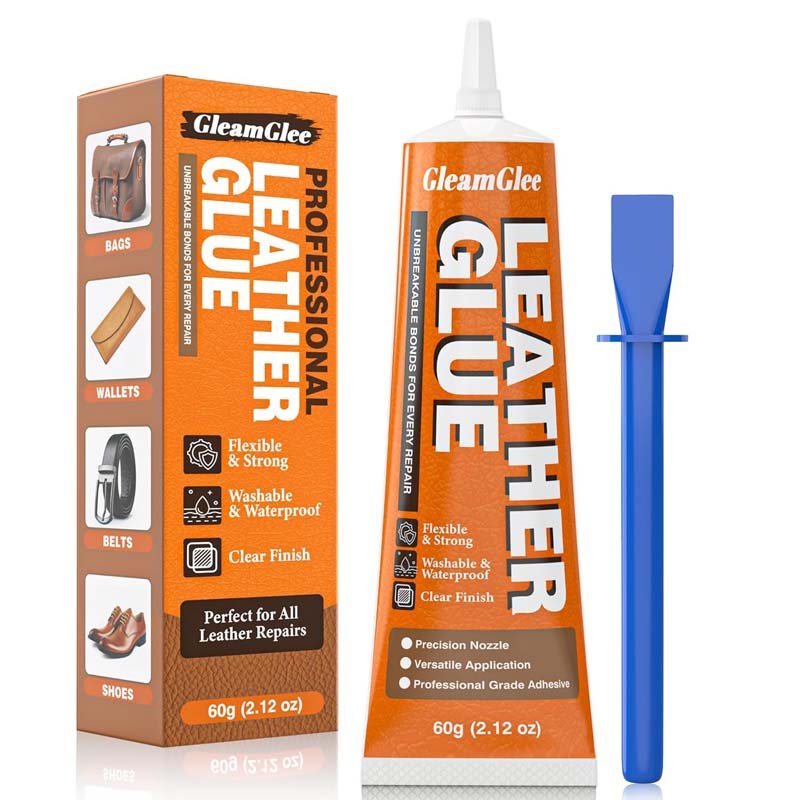
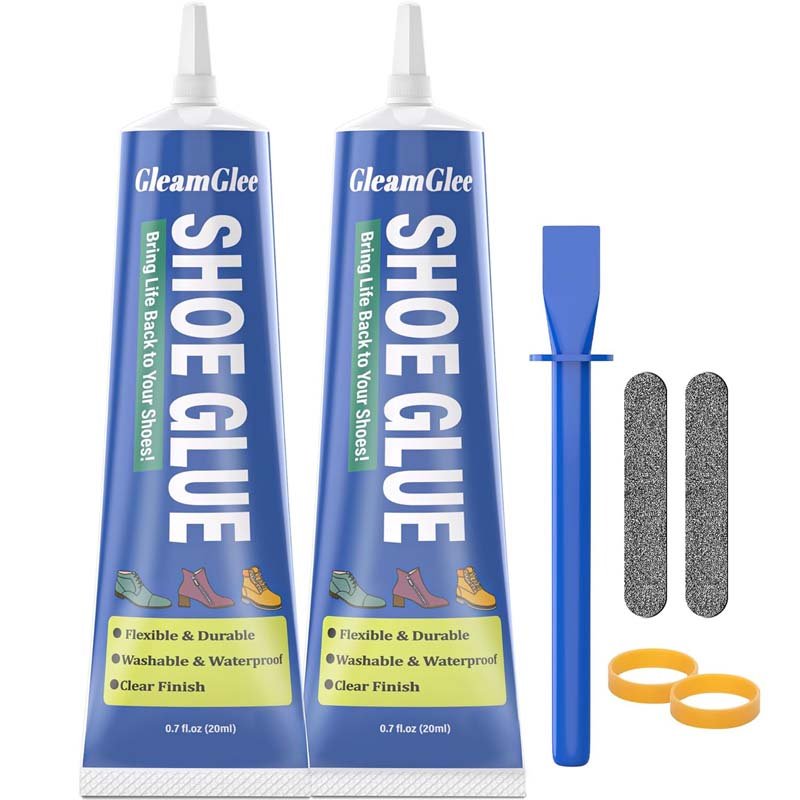
Why Many People Choose GleamGlee Fabric Glue for Leather Clothing

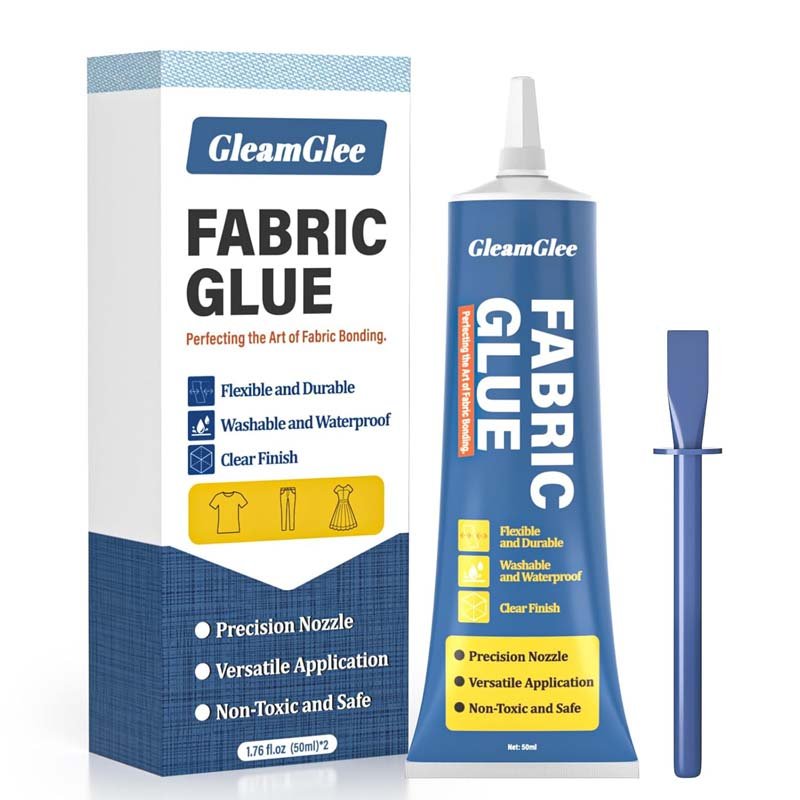
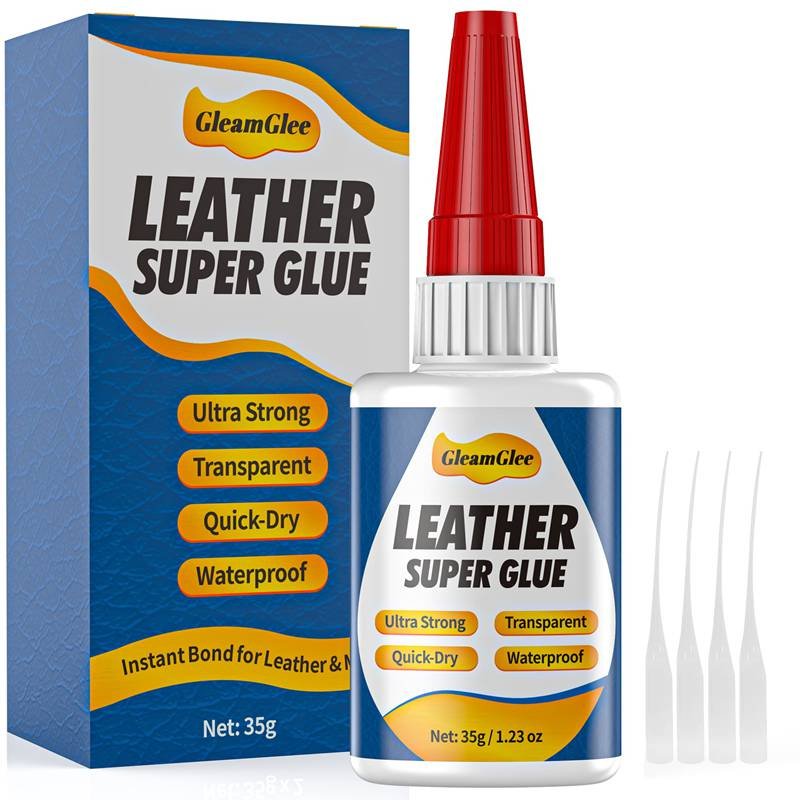
For leather apparel repairs, many users choose GleamGlee Fabric Glue as a Leather-Safe Editor’s Pick.
It’s favored for clothing because it focuses on control, flexibility, and surface safety:
- Leather-safe formula that helps prevent staining
- Bonds leather to fabric without hardening
- Flexible after drying, ideal for garments
- Clean, low-visibility finish on visible areas
- Suitable for jackets, trims, panels, and fashion leather
Instead of overpowering the leather, GleamGlee provides a balanced, garment-friendly bond.
Which Leather Clothing Repairs Work Best with Fabric Glue
Best Uses
✔ Leather + fabric bonding
✔ Small clothing repairs
✔ Decorative or edge reinforcement
✔ Visible garment areas
Not Recommended For
✘ Heavy structural repairs
✘ Load-bearing seams
✘ Large surface lamination
Choosing the right application protects both the repair and the leather itself.
Protect the Leather. Fix It the Right Way.

Leather clothing isn’t cheap — and it shouldn’t be treated like disposable fabric.
The right fabric glue allows you to:
- Repair garments safely
- Preserve softness and appearance
- Avoid irreversible damage
- Extend the life of leather clothing you love
👉 Choose a leather-safe fabric glue — because leather deserves a careful touch.