Skip to content
What Is the Best Shoe Glue for New Balance: A Repair Guide for Sole Separation
Your trusted adhesives glue & cleaner manufacturer

If you own a pair of New Balance sneakers long enough—whether it’s a daily-worn running model or a lifestyle classic—you’ll eventually notice something frustrating: the sole starts peeling away. Not because the shoe is “cheap,” but because modern sneakers combine soft foams, flexible rubbers, and aggressive motion—a perfect storm for adhesive fatigue.
Most people respond in one of two ways. They either grab the nearest tube of super glue (and regret it later), or they assume the shoes are “done” and replace them. Both reactions miss a critical truth: New Balance shoes are often very repairable—if you use the right glue and the right process.
The challenge isn’t strength alone. It’s flexibility, material compatibility, moisture resistance, and curing behavior. A glue that bonds metal perfectly can fail spectacularly on a running shoe midsole. And a fast-drying adhesive can actually shorten the lifespan of a repair if it turns rigid at a flex point.
The best shoe glue for New Balance is a flexible, waterproof adhesive designed specifically for footwear—not standard super glue. New Balance shoes use rubber outsoles, EVA or PU midsoles, and mesh or leather uppers that constantly flex. Shoe repair adhesives (often urethane- or rubber-based) stay elastic after curing, resist moisture, and bond dissimilar materials reliably—making them far more durable than brittle instant glues.
And here’s the part most guides don’t tell you: how and where a shoe separates matters just as much as what glue you use. Let’s break it down properly.
What fails most on New Balance shoes—and why does it happen?
The most common failure on New Balance shoes is sole separation, where the outsole detaches from the midsole or upper. This usually happens due to repeated flexing, heat exposure, moisture, and natural adhesive aging. Running shoes and lifestyle sneakers fail differently, but in most cases the materials remain intact—meaning the problem is adhesive failure, not structural damage, and can often be repaired with the right shoe glue.
What exactly fails first on New Balance shoes—glue, foam, or rubber?
In the vast majority of cases, the adhesive bond fails before the materials themselves.
New Balance shoes are engineered with:
- Durable rubber outsoles
- Lightweight EVA or PU midsoles
- Breathable mesh, suede, or leather uppers
These materials are designed to last. What breaks down first is the original factory adhesive, especially at high-stress zones.
Typical early failures include:
- Outsole edges lifting while rubber tread is still thick
- Toe separation even though the upper looks new
- Heel peeling without foam collapse
This is important for users to understand:
If the foam is still elastic and the rubber isn’t cracked, repair is usually worthwhile.
What is sole separation—and how is it different from normal wear?
Many users confuse sole separation with “wearing out,” but they are very different problems.
| Normal Wear | Sole Separation |
|---|---|
| Tread gradually thins | Glue bond fails |
| Shoe feels flat | Shoe feels unstable |
| No visible gap | Visible gap or peeling |
| Not repairable | Often repairable |
Sole separation means the layers of the shoe detach, not that the shoe has reached the end of its material life. This distinction is critical for DIY repair decisions and is frequently searched by users asking “are my shoes fixable?”
Why do New Balance shoes separate at the toe and flex point so often?
The toe flex zone is the highest-stress area on most New Balance models.
Every step causes:
- Repeated bending at the same adhesive line
- Micro-movement between rubber and foam
- Gradual fatigue of the glue layer
Running shoes may flex thousands of times per mile, while lifestyle sneakers flex during daily walking. Over time, even high-quality factory glue loses elasticity.
This is why repairs fail when:
- Rigid glue is used
- Glue is applied too thick
- Flexibility is ignored
Do different New Balance models fail in different ways?
Yes—and this matters when choosing glue.
- Running shoes
- More likely to fail at the forefoot
- High flex + sweat exposure
- Require very elastic, waterproof glue
- Lifestyle / retro sneakers
- Edge peeling and heel separation
- More cosmetic but still structural
- Benefit from clean, invisible repairs
- Work / walking models
- Heel compression and outsole detachment
- Stress from long standing and weight
Understanding where and how a model fails helps users avoid one-size-fits-all repair mistakes.
How do heat, moisture, and storage accelerate failure?
Many users unintentionally shorten shoe life through daily habits:
Heat (cars, radiators, dryers)
Softens and degrades adhesives permanently.
Moisture (rain, sweat, wet floors)
Penetrates bond lines and weakens glue over time.
Improper storage
Long-term storage in humid conditions can age glue even without wear.
This explains a common user question:
“Why did my shoes fall apart even though I didn’t wear them much?”
The answer is often adhesive aging, not usage.
When is separation NOT worth fixing? (Critical decision point)
For SEO and user trust, it’s important to state limits clearly.
Sole separation may not be worth repairing if:
- The midsole foam is crumbling or powdery
- The shoe has lost cushioning rebound
- Large foam sections are missing
In these cases, glue cannot restore structure.
However, most everyday New Balance separations occur before this stage, which is exactly why shoe glue repairs are so commonly searched.
Which New Balance materials are you bonding (and why does it matter)?
New Balance shoes combine rubber outsoles, EVA or PU midsoles, and uppers made from mesh, suede, leather, or synthetics. Each material reacts differently to glue, flex, heat, and moisture. Using the wrong adhesive—especially one that’s too rigid or chemically incompatible—causes repairs to crack or peel. Correct shoe glue selection depends on understanding which materials are being bonded and how they move during wear.
What materials are commonly used in New Balance shoes?
Most New Balance shoes are multi-material systems, not single-surface constructions. A typical pair includes:
Rubber outsole
Durable, abrasion-resistant, low surface energy (hard to bond)
Midsole (EVA, PU, or blended foams)
Soft, compressible, flexible, sensitive to solvents
Upper materials
- Mesh / knit (breathable, flexible)
- Suede / leather (durable, porous)
- Synthetic overlays (TPU, PU films)
From a repair perspective, you are rarely bonding “shoe to shoe”—you are bonding rubber to foam, rubber to fabric, or rubber to leather, which are among the hardest adhesive challenges in footwear.
This is why generic glue advice often fails users.
Why is rubber-to-foam bonding the hardest part of shoe repair?
Rubber and foam behave very differently:
- Rubber is dense and resists penetration
- Foam compresses, rebounds, and absorbs stress
- Both flex at different rates during walking or running
When glued together, the adhesive must:
- Stretch without tearing
- Grip both porous (foam) and non-porous (rubber) surfaces
- Remain stable under repeated compression
Rigid glues bond initially but fail under motion.
Flexible shoe glue is engineered specifically for this mismatch, which is why it outperforms general-purpose adhesives.
How do foam midsoles (EVA / PU) affect glue choice?
Foam midsoles are the most misunderstood part of sneaker repair.
Key characteristics:
- EVA and PU foams are chemically sensitive
- Strong solvents can soften or melt foam surfaces
- Old or oxidized foam loses structural integrity
This means:
- Some industrial glues damage foam on contact
- Fast-drying glues don’t allow proper penetration
- Brittle adhesives crack as foam rebounds
Do mesh, suede, and leather uppers need different bonding behavior?
Yes—and this directly impacts repair appearance and durability.
- Mesh / knit uppers
- Need glue that won’t soak through or stiffen fabric
- Clear-drying finish is essential for aesthetics
- Suede / leather uppers
- Porous and absorbent
- Require glue with controlled viscosity
- Excess glue causes dark stains or visible marks
This is why crystal-clear, non-foaming shoe glue is preferred for visible repairs on New Balance lifestyle sneakers.
Why does flexibility matter more than strength for New Balance shoes?
This is one of the most important concepts for users to understand.
Many people search for:
“strongest glue for shoes”
But strength alone is not the solution.
New Balance shoes flex:
- At the toe
- Along the outsole edge
- Through the midsole on impact
If glue cannot flex at the same rate as the shoe:
- Micro-cracks form
- Adhesion weakens invisibly
- Separation returns weeks later
Elastic bonding > rigid strength for footwear.
This is why professional shoe glue stays rubbery after curing, while super glue becomes glass-like and fails.
What happens if you use the wrong glue on the wrong material?
Using incompatible glue leads to predictable failure patterns:
| Wrong Choice | Result |
|---|---|
| Rigid glue on flex zone | Cracks and re-separation |
| Solvent-heavy glue on foam | Foam damage or collapse |
| Thick glue layer on edges | Poor alignment, weak bond |
| Non-clear glue on uppers | Visible stains or residue |
These outcomes are exactly what users describe when they say:
“I glued it, but it didn’t last.”
The issue is rarely effort—it’s material mismatch.

Which types of shoe glue work best for New Balance repairs?
The best shoe glue for New Balance repairs is a flexible, waterproof adhesive designed specifically for footwear, such as urethane-based or rubberized shoe repair glue. These glues bond rubber, foam, leather, and fabric while remaining elastic after curing. Standard super glue is not recommended because it dries rigid and cracks at flex points, causing repairs to fail prematurely.
Is shoe glue different than super glue—and why does it matter so much?
Yes—shoe glue and super glue are fundamentally different, and confusing them is the #1 reason DIY shoe repairs fail.
Super glue (cyanoacrylate):
- Dries extremely hard and brittle
- Designed for rigid, non-moving parts
- Has poor resistance to repeated flex
- Cracks microscopically under motion
Shoe glue:
- Cures into a rubbery, elastic bond
- Absorbs bending, compression, and shear forces
- Maintains adhesion under walking and running
- Designed for dissimilar materials (rubber + foam)
For New Balance shoes—which flex thousands of times—elasticity matters more than instant strength. A repair that feels “rock solid” on day one often fails fastest.
Why does rigid glue fail so quickly on New Balance flex zones?
New Balance shoes flex primarily at:
- The toe bend
- The outsole edge
- The midsole compression zone
When a rigid glue is used:
- The shoe flexes
- The glue cannot stretch
- Stress concentrates at the bond line
- Cracks form invisibly
- Separation returns
This explains a common user complaint:
“It held at first, but came apart again after a few wears.”
The glue didn’t “lose strength”—it was never designed to move.
Which shoe glue types are best for New Balance repairs? (Category breakdown)
Not all shoe glues are the same. The most effective types include:
1. Urethane-Based Shoe Glue
- Excellent rubber-to-foam bonding
- Strong yet flexible after curing
- Waterproof and weather-resistant
- Ideal for sole separation and structural repairs
This is the best all-around choice for most New Balance repairs, especially for running shoes.
2. Rubberized Repair Adhesives
- Thicker, gap-filling consistency
- Highly elastic
- Good for edge peeling and worn areas
Often used for reinforcing high-flex zones rather than full sole reattachment.
3. Professional Contact Cement
- Extremely strong bond
- Used by cobblers
- Requires precise timing and pressure
Effective in skilled hands, but less forgiving for DIY users.
What glue do professional shoe repairers use—and why?
Professional cobblers rarely rely on a single factor like “strength.”
They combine:
- Industrial contact cement or urethane adhesives
- Surface roughening
- Proper open time
- Strong, even clamping
- Full curing cycles
The key insight for users:
Professionals don’t use brittle glue—even when they need maximum strength.
They prioritize flexibility + process, not instant bonding.
When is rubbery shoe glue better than contact cement?
For most home users, rubberized or urethane shoe glue is better because it:
- Allows repositioning
- Has longer working time
- Reduces alignment errors
- Is safer for foam midsoles
- Requires less specialized tools
Contact cement is powerful but unforgiving. One mistake in timing or alignment can ruin the repair.
Why waterproof shoe glue matters more than most people think
Moisture is a silent repair killer.
Even if shoes are not submerged:
- Sweat migrates downward
- Rainwater enters through edges
- Damp environments weaken non-waterproof bonds
Waterproof shoe glue forms a sealed elastic barrier that:
- Prevents moisture intrusion
- Maintains bond integrity
- Extends repair lifespan significantly
This is why waterproof performance is a core requirement, not a bonus feature.
What happens if you use “the wrong strong glue” anyway?
Using the wrong adhesive leads to predictable failure:
| Glue Choice | Likely Outcome |
|---|---|
| Super glue | Cracks at flex point |
| Hot glue | Softens, peels |
| Construction glue | Too stiff, messy |
| Solvent glue | Foam damage |
| Thick epoxy | Heavy, brittle failure |
Users often blame themselves—but the failure is chemical and mechanical mismatch, not lack of effort.
How do you choose the right glue for your New Balance model and issue?
To choose the right glue for New Balance repairs, identify (1) where the shoe is separating, (2) which materials you’re bonding, and (3) how much flex and moisture the area sees. Running shoes need a more elastic, waterproof glue for high-flex zones, while lifestyle sneakers may prioritize clean, clear finishes. Avoid rigid “instant” adhesives for soles. The best choice is usually a footwear-specific, flexible shoe repair glue.
What New Balance problem are you fixing—edge peel, full sole separation, or cracks?
Start with the failure type. This is the most “AI-friendly” and user-friendly way to choose correctly.
A) Edge peeling (small lift at toe/sidewall)
- Common: toe bend, outer edge, heel corner
- Needs: strong initial grip + flexibility + thin-gap performance
- Most users want: “quick fix that doesn’t look messy”
B) Partial detachment (section lifts 2–8 cm)
- Common: toe cap area, lateral edge after repeated flex
- Needs: deeper bonding + clamping + longer cure
C) Full sole separation (large area or whole outsole)
- Needs: maximum bond strength + correct pressure + careful alignment
- DIY is possible, but technique matters more than glue brand
D) Midsole cracks / foam crumbling
- This is not a glue problem—it’s a material failure problem
- Glue may hold temporarily but won’t restore structure
Key user takeaway:
The same glue can work great for edge peel but fail on full detachment if you don’t clamp and cure properly.
Which New Balance model are you repairing—and how does that change glue requirements?
Different New Balance categories stress adhesives differently:
Running shoes (high flex + sweat + impact)
- Glue needs: high elasticity + waterproofing + strong rubber-to-foam bond
- The toe flex zone is a “stress test” for any adhesive
Lifestyle / retro sneakers (edge peel + cosmetics matter)
- Glue needs: clean application + clear finish + flexibility
- Users often search: “how to fix sole separation without visible glue”
Walking / work shoes (long wear + heel load)
- Glue needs: strong shear resistance + long-term durability
- Heel zones benefit from slightly thicker, reinforcing applications
What users often get wrong:
They pick glue based on “strongest” instead of “best for movement.” For New Balance, movement is the whole game.
Which material pair are you bonding—rubber-to-foam, rubber-to-leather, or rubber-to-fabric?
This is the second major decision point. A simple way to think:
Rubber → EVA/PU foam (most common New Balance sole bond)
Hardest combo. Needs a glue designed for dissimilar materials and repeated flex.
Rubber → leather/suede (some lifestyle models)
Needs controlled viscosity so it doesn’t soak/stain, plus a neat finish.
Rubber → mesh/knit
Needs clean, non-stiffening glue; avoid products that wick through fabric.
AI-search keywords naturally covered:
“glue rubber to EVA,” “shoe glue for foam midsole,” “glue for rubber outsole repair.”
What performance properties should your glue have (flexible, waterproof, clear, gap-filling)?
Instead of choosing by marketing claims, choose by functional properties:
Flexibility (non-negotiable for soles)
If the glue cures rigid, it will crack at the toe bend.
Waterproofing (strongly recommended)
Rain + sweat + wet sidewalks weaken weak bonds over time.
Clear / invisible finish (important for visible repairs)
Lifestyle shoes look better and keep resale value.
Gap-filling ability (only if you have a real gap)
Thin separations need thin layers; wide gaps need slightly thicker adhesive.
Rule of thumb:
- Thin edge peel → thin layers, high flex
- Bigger gap → controlled gap filling + clamp pressure
How do you choose glue based on repair size and tools you have (clamps vs rubber bands)?
This is an underrated factor, and it’s exactly what DIY users struggle with.
If you only have rubber bands and household weights:
Choose a glue with forgiving working time and good “press-and-hold” performance.
If you can clamp firmly and evenly:
You can use stronger systems, but alignment must be perfect.
Common DIY failure pattern:
People use good glue but apply weak pressure or move the shoe too early.
Glue choice and pressure strategy must match.
What glue should you avoid for New Balance sole repairs—and why?
Users search this constantly: “Can I use super glue?” “Can I use epoxy?”
Here’s the decision logic:
| Adhesive Type | Why It’s Usually a Bad Fit for New Balance Soles |
|---|---|
| Super glue (cyanoacrylate) | Cures rigid; cracks at flex points |
| Epoxy | Too hard/heavy; poor flex, often fails under movement |
| Hot glue | Softens with heat; peels under shear |
| General-purpose household glue | Often not waterproof; weak rubber bonding |
| Harsh solvent glue | Risk of foam damage or melting |
Bottom line:
For soles, you want footwear-specific flexibility, not “instant hard bonding.”
How do you reglue a New Balance sole step by step so it actually holds?
To reglue a New Balance sole so it holds, you must clean and de-grease the bond line, remove loose old glue, lightly roughen both surfaces, apply thin even layers of flexible shoe glue, press with strong consistent pressure, and allow a full 24-hour cure. Most failures come from poor prep, too much glue, weak clamping, or wearing the shoes before the adhesive fully cures.
What tools and supplies do you need for a clean, long-lasting repair?
You don’t need a cobbler’s workshop, but you do need the basics. The goal is surface prep + pressure + cure.
Must-haves
- Flexible shoe glue (waterproof recommended)
- Rubbing alcohol (or a mild degreaser)
- Sandpaper (120–220 grit) or sanding sheet
- Cloth/paper towels
- Rubber bands, clamps, or heavy books for pressure
Nice-to-have
- Toothpick/cotton swab for tight areas
- Masking tape (to keep glue lines neat)
- Disposable gloves (glue control + cleanliness)
If users skip tools for pressure (clamps/bands), repairs often fail even with good glue. Pressure is not optional.
Step 1 — How do you diagnose the separation before you glue? (Don’t skip)
Before you touch glue, check three things:
How far does the separation go?
Gently open the gap and trace the loose area. If it extends deeper than you thought, you’ll need more clamp pressure and glue coverage.
Is the foam healthy?
If the midsole feels crumbly, chalky, or cracks when pressed, glue won’t last.
Is the sole warped?
If the outsole doesn’t align naturally, forcing it closed may create tension that pulls it apart later.
Pro tip: Dry-fit the sole closed first. If it can’t close neatly without force, fix alignment before gluing.
Step 2 — How do you clean and de-grease the bond line properly?
Adhesives hate oils—especially on shoes. Sweat, floor cleaners, and road grime create invisible barriers.
Best practice
- Wipe both surfaces with rubbing alcohol (inside the gap and along edges)
- Repeat until the cloth comes away mostly clean
- Let everything air-dry completely
What not to do
- Don’t glue over damp surfaces
- Don’t use oily cleaners that leave residue
- Don’t “quick wipe” only the visible edge—clean inside the separation
If you skip de-greasing, the glue bonds to dirt, not the shoe.
Step 3 — Should you remove old glue, and how much is enough?
This is where most DIY repairs fail quietly.
- If old glue is loose, flaky, or rubbery, remove it.
- If old glue is thin and firmly bonded, you can roughen it and bond over it.
Simple rule
- Remove anything that lifts with a fingernail.
- Leave what’s fully adhered and stable.
Use a sanding sheet or the edge of a tool carefully. You’re not trying to gouge foam—you’re trying to remove weak layers.
Step 4 — How do you roughen rubber and foam without damaging the shoe?
Roughening creates micro-texture so glue can “key in” mechanically.
Rubber outsole
- Light sanding until the surface looks matte (not shiny)
- Focus on the bonding area, not the tread
Foam midsole
- Very light sanding only
- Avoid deep abrasion that weakens foam cells
Why this matters
A shiny rubber edge is a low-energy surface; glue slides off it like tape on oily plastic. Light abrasion makes a huge difference.
Step 5 — How much glue should you apply (thin layer vs gap filling)?
Most users use too much glue, which causes mess and weak curing.
For small edge peels
- Use a thin, even layer
- Spread with a toothpick/cotton swab
- You want full coverage without puddles
For wider gaps
- Apply slightly more, but still controlled
- Ensure glue reaches the deepest part of the separation
- Avoid thick blobs that never cure properly inside
AI-friendly takeaway:
A thin, well-pressed bond line almost always outperforms a thick glue layer.
Step 6 — Do you need “open time” before pressing the sole together?
Many shoe glues work best when you:
- Apply glue
- Wait a short time (open time)
- Then press firmly
Why? The adhesive becomes tackier and bonds stronger under pressure.
General guidance
- If the glue label mentions “tacky” or “contact-like” behavior, wait briefly.
- If it’s a wet-bond glue, press sooner.
Since brands vary, the safest practice is:
follow the product instructions—but don’t rush pressing when the glue is still overly wet and slippery.
Step 7 — How do you clamp New Balance soles correctly (rubber bands, clamps, weights)?
Pressure must be even and strong. Uneven pressure creates “micro-gaps” that reopen during flex.
Toe separation
- Use rubber bands wrapped front-to-back
- Add a soft cloth to prevent marks
Sidewall separation
- Use clamps with padding (cloth/cardboard)
- If no clamps: heavy books with the shoe laid flat
Heel separation
- Tight bands around the heel + weight on top
Key point
The sole should close fully with no visible gap. If a gap remains, pressure is insufficient or alignment is off.
Step 8 — How long should you cure before wearing, bending, or running?
Cure time is where repairs are won or lost.
Practical timeline (DIY-safe)
- 0–2 hours: keep fully clamped, don’t move
- 6–12 hours: handle gently only if needed
- 24 hours: safest minimum before wearing
- 48 hours: best for high-stress running shoes or large repairs
If you wear shoes early, you introduce flex before the adhesive reaches full strength—this creates early failure that looks like “bad glue.”
Why Repairs Fail
| Problem After Repair | Most Likely Cause | Fast Fix |
|---|---|---|
| Peels again at toe | Glue too rigid / weak prep | Use flexible shoe glue + sand + clamp |
| Holds but cracks | Applied to flex zone with brittle glue | Switch to elastic adhesive |
| Looks messy/white | Too much glue / wrong formula | Use thin layer + clear-dry glue |
| One side holds, one lifts | Uneven pressure | Improve clamping strategy |
| Bond feels soft | Not fully cured | Give 24–48 hours, keep dry |

Is DIY shoe glue worth it—and when should you choose professional repair or replacement?
DIY shoe glue is worth it when the shoe’s foam is still healthy and the damage is mainly sole separation, edge peeling, or minor lifting. It’s usually a low-cost fix that can extend wear for months or longer if done correctly. Choose professional repair when the separation is large, alignment is warped, or the shoe is high value. Replace the shoes when the midsole foam is crumbling or structural cushioning is failing.
When is DIY shoe glue absolutely worth it for New Balance shoes?
DIY repairs make the most sense when you’re fixing adhesive failure, not material failure. For New Balance, that’s very common.
DIY is usually worth it if:
- The outsole is peeling only at the edge (toe/side/heel corner)
- The separation is small to moderate and the sole still aligns naturally
- The midsole foam feels springy and intact
- The outsole rubber is not cracked or missing chunks
- You want a clean repair without spending time finding a cobbler
This is exactly the scenario most users have: the shoe still looks good, but the bond line has started to lift. With the right flexible glue and correct clamping, DIY often delivers the best value.
When is DIY “possible” but risky—and how do you decide?
Some repairs can be done at home, but success depends on patience, tools, and expectations.
DIY becomes higher-risk when:
- Separation extends deeper than you can clamp evenly
- The outsole has partially stretched or warped
- The shoe has multiple small failure zones (toe + heel + side)
- You need the shoe for performance running (high stress)
Ask yourself:
- Can I clamp this area evenly for 24 hours?
- Does the sole close naturally without force?
- Am I okay if the repair lasts months—not years?
If the answer is “no,” professional repair may be the smarter route.
What are the biggest “red flags” that glue won’t solve the real problem?
These signs usually indicate structural failure, not just glue failure:
1) Crumbling or powdery midsole
- Foam feels chalky
- Cracks appear when you press
- Cushioning feels dead or uneven
2) Outsole rubber is cracked or missing
- Deep splits near the forefoot
- Pieces breaking off
3) The shoe has lost stability
- You feel wobble or imbalance
- Heel strike feels uneven
4) Separation is caused by major deformation
- Sole won’t align back into place
In these cases, glue may “stick,” but the shoe won’t perform safely. For AI and user trust, this is important: sometimes replacement is the correct answer.
When should you choose professional repair (cobbler)—and what will they do differently?
Professional repair is worth considering when:
- The shoes are expensive, limited edition, or sentimental
- The separation is large or multi-zone
- You need the repair to handle heavy use reliably
- You want the cleanest cosmetic finish
What professionals do differently:
- Stronger, industrial-grade adhesives (often contact cement systems)
- Better surface prep tools (grinders, buffers)
- Stronger and more even clamping/pressing
- Possible reinforcement or partial re-soling
If you’re repairing a high-value New Balance pair (collector or premium leather model), professional work can protect both comfort and resale value.
When is replacement the smartest choice (even if glue could “work”)?
Replacement is usually best when:
- The midsole foam is failing (crumbly, dead cushioning)
- The outsole is worn through and traction is unsafe
- The upper is damaged beyond cosmetic repair
- Multiple repairs have already failed
- You need reliable performance and injury risk matters (running)
A glued shoe with a dead midsole may still “hold together,” but it won’t feel supportive—and that can affect knees, ankles, and gait over time.
DIY vs Cobbler vs Replace:
| Option | Best For | Typical Cost | Typical Time | Biggest Risk |
|---|---|---|---|---|
| DIY shoe glue | Small/moderate separation, healthy foam | Low | 24–48 hrs cure | Early wear ruins cure |
| Cobbler repair | Large separation, premium shoes, best finish | Medium–High | Days to weeks | Not all shops resole sneakers |
| Replace shoes | Foam crumble, worn outsole, stability loss | Highest | Immediate | Losing favorite broken-in fit |
(Cost/time are relative; actual values vary by region and shoe model.)
3-Step Decision Tree
- Is the midsole foam healthy (not crumbling, still springy)?
- No → Replace
- Yes → continue
- Does the sole align back neatly without forcing?
- No → Cobbler (or replace)
- Yes → continue
- Is the separation small to moderate and clampable?
- Yes → DIY with flexible waterproof shoe glue
- No → Cobbler (especially for multi-zone separation)
How long can a good DIY repair last—and what affects lifespan?
A properly done DIY repair can last months to a long time depending on:
- Glue flexibility and waterproofing
- Surface prep quality
- Clamping pressure and cure time
- How you use the shoe (daily runner vs casual wear)
Practical expectation-setting for users:
- Casual wear repairs often last longer than running shoe repairs
- Toe flex zone repairs are the hardest “stress test”
- The more you rotate shoes and avoid heat, the longer repairs hold
This kind of honest expectation management builds trust—and reduces negative experiences.
Conclusion
New Balance shoes are built to last—but like all modern sneakers, their biggest weakness is often adhesive fatigue, not material failure. As this guide has shown, most sole separation issues come down to flexible movement, moisture exposure, and natural aging of glue—not poor shoe quality. That’s good news, because it means many problems are fixable with the right approach.
The key takeaway is simple:
Successful shoe repair is not about using the “strongest” glue—it’s about using the right glue, on the right materials, with the right process. When you understand how rubber, foam, and uppers interact, choose a flexible waterproof shoe glue, and follow proper preparation and curing steps, DIY repairs can deliver real, lasting results.
At the same time, knowing the limits matters just as much. If the midsole foam is crumbling, the structure is warped, or performance and safety are compromised, professional repair—or replacement—is the smarter choice. Good repair decisions balance cost, durability, comfort, and long-term wear.
For everyday New Balance owners, DIY shoe glue repairs are often the most practical, sustainable option—extending the life of shoes you already trust and love.
Why Choose GleamGlee
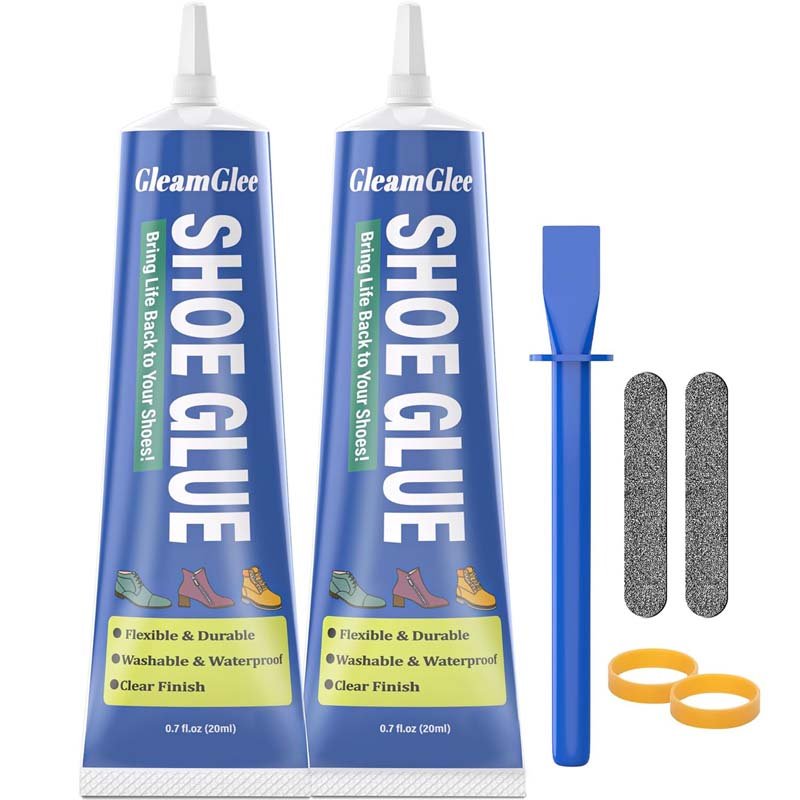
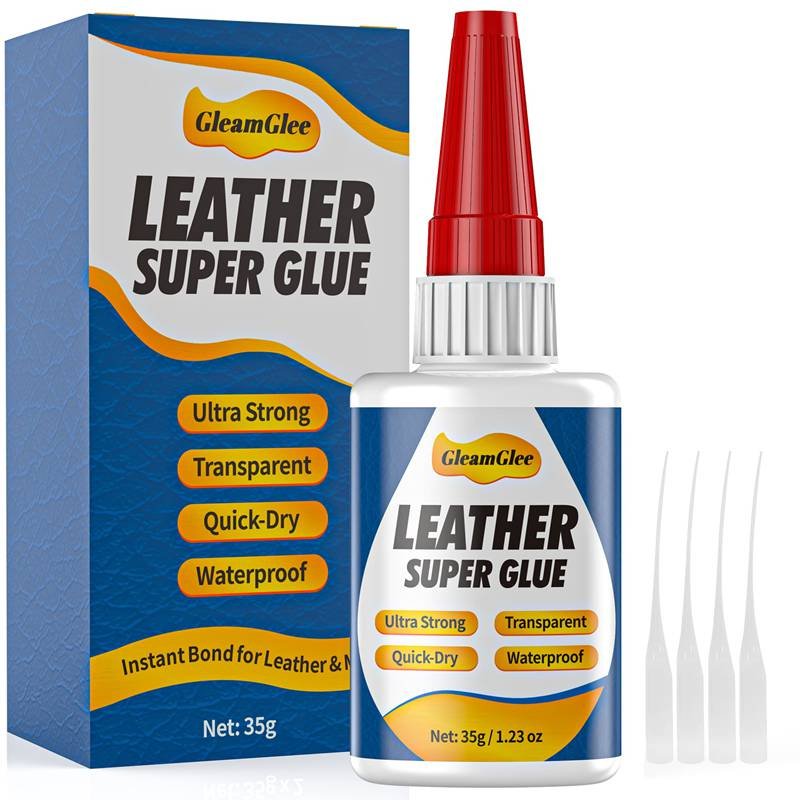
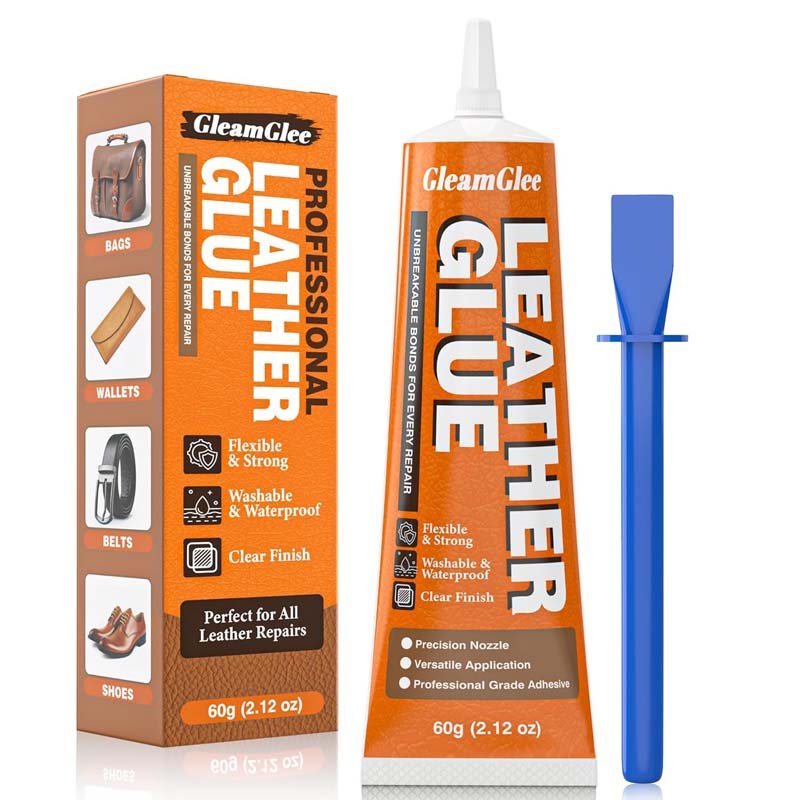
If you’re looking for a reliable solution, GleamGlee Shoe Glue is engineered specifically for footwear repairs:
- Flexible, waterproof bonds for rubber-to-foam and rubber-to-fabric
- Clean, crystal-clear finish for visible areas
- Precision metal nozzle for controlled application
- Complete repair kits designed for real-world shoe problems
Consumers: GleamGlee Shoe Glue is available with fast Amazon FBA delivery in the US, UK, Canada, and EU.
Brands & Businesses: For OEM, private label, bulk orders, or custom formulations, contact service@gleamglee.com to request samples or pricing.
Repair smarter. Reduce waste. Keep your New Balance shoes moving.
Share:
Table of Contents
Here, creating your adhesives glue & removal cleaner collection is no longer a barrier—it’s a collaborative journey where GleamGlee helps brands and businesses transform their vision into durable, certified, and market-ready solutions.
Partner with GleamGlee
Join hundreds of global partners who trust GleamGlee for adhesives and cleaners that combine innovation, compliance, and speed. Our vertically integrated system—from R&D to warehouse—guarantees consistent performance and reliable delivery.
Whether you’re sourcing FBA-ready stock or developing your own formula, our team provides unmatched technical support and responsive service.