Skip to content
What Is the Best Glue for Shoe Soles?
If your shoe sole is peeling, slipping, or letting water in, the “best glue” depends on the sole material, flex level, and where the separation happens. This guide walks you through a practical decision framework, proven glue types, and step-by-step repair methods that hold up.
A loose shoe sole looks like a small problem—until it turns into a daily annoyance: squeaking steps, edge lifting, wet socks, or a sole that “rolls” under your foot. Many people try a random glue, press for a minute, and hope for the best… then the sole peels again within a week.
In our experience, shoe-sole repairs fail for predictable reasons: the wrong glue chemistry for the material (especially rubber-like soles), not enough surface prep, or not giving the bond enough pressure and cure time. The good news is that a strong, clean repair is absolutely doable at home—if you match the glue to the job and use a repeatable process.
Why Does Shoe Sole Glue Choice Matter So Much?
Shoe soles bend thousands of times per week, get scraped on concrete, and face water, heat, and sweat. The “wrong” glue often fails not because it’s weak, but because it’s the wrong type of strength (too brittle, too rigid, or incompatible with the sole surface). This section explains the real failure modes.
A shoe sole is a “moving joint,” not a static bond
Most people imagine gluing a sole like gluing two flat pieces of wood. But a sole joint behaves more like a flexing hinge:
- Repeated bending: every step creates micro-stresses at the bond line (especially at the toe bend area).
- Shear + peel forces: the sole doesn’t just pull straight off—edges “peel,” which is the hardest force for adhesives to resist.
- Abrasion at the edges: sidewalk friction slowly attacks the exposed glue line.
- Temperature swings: hot pavement and cold winter air expand/contract materials differently.
Translation: The best glue for shoe soles usually needs flexible toughness, not just “hard strength.”
The real risks of a failed sole repair
A poor adhesive choice can create problems that feel bigger than the original damage:
Safety & walking stability
A partially detached sole can catch the ground, causing a stumble—especially on stairs or wet pavement.
Water entry & odor build-up
Small edge gaps act like a funnel. Moisture trapped inside the shoe increases odor, weakens insoles, and can accelerate material breakdown.
Permanent cosmetic damage
Some glues leave shiny marks, white haze, or stiff ridges. Once cured, those are hard to remove without sanding—risking more damage.
Material distortion
A glue that cures too rigid can “lock” the sole in a slightly misaligned position. Over time, that changes how the shoe flexes and can feel uncomfortable.
Repair becomes harder next time
Failed repairs often leave a contaminated surface (old glue + dirt + oils). The next attempt requires more prep and sometimes still won’t bond well.


The 7 most common failure patterns
“It held for a day… then peeled at the edge.”
Usually indicates not enough surface prep, insufficient clamp pressure, or an adhesive that can’t resist peel forces.
2) “The bond feels hard and cracks when I bend the shoe.”
Classic sign of brittle adhesive (often fast-setting types) used on a high-flex zone.
3) “The glue looked fine, but it separated cleanly like tape.”
Often poor wetting/compatibility—the glue never truly “grabbed” the sole surface.
4) “It keeps failing at the toe bend area.”
That zone experiences the highest flex cycles. It needs elastic, fatigue-resistant bonding, plus longer cure time.
5) “The glue got gummy/soft after rain.”
Can be incomplete cure, low water resistance, or excessive glue thickness that never cured properly.
6) “The sole shifted out of place while curing.”
Working time too short, no alignment control, or uneven clamp pressure.
7) “The repair smells strong and the material looks rough.”
Solvent sensitivity issue: some foams or finishes can be affected by harsh formulations.
Glue mismatch is the #1 reason repairs fail
When people say “this glue is strong,” they usually mean hardness or instant grab. But soles need different strengths:
- Peel resistance (edge lifting)
- Shear resistance (sliding forces while walking)
- Fatigue resistance (micro-movement repeated thousands of times)
- Elastic recovery (returns after bending without cracking)
A glue can be “strong” in one category and terrible in another—so the repair still fails.
Quick “Failure Cause → Fix” table
| What you see after repair | Most likely cause | What to do differently next time |
|---|---|---|
| Edge lifts first | Peel stress + poor prep | Clean/roughen; use flexible adhesive; clamp edges evenly |
| Crack lines in glue | Too brittle/rigid glue | Switch to flexible sole adhesive; avoid brittle quick-fix glues |
| Clean separation (no residue) | Low compatibility / no wetting | Choose adhesive designed for rubber/sole materials; prep better |
| Glue stays rubbery/gummy | Too thick + under-cured | Apply thin even coat; allow full cure; improve ventilation |
| Sole misaligned | Set time too fast / no clamping plan | Dry-fit first; use guides/tape; clamp with uniform pressure |
| White haze / shiny marks | Squeeze-out + surface staining | Use minimal glue; wipe immediately; mask edges if needed |
| Fails only in toe bend | Highest flex zone | Use high-flex adhesive + longer cure; reinforce with better prep |
Real-life “why it matters” scenarios
Scenario A: Work boots
Heavy body weight + heel impact means the bond line takes repeated shock. A brittle glue may crack even if it “felt rock solid” initially.
Scenario B: Running shoes
Toe bend and sidewall flex happen constantly. Repairs need flexibility and fatigue resistance, not just instant grab.
Scenario C: Wet-weather commuting
Water infiltration plus temperature changes can break weak bonds fast. A repair that isn’t fully cured before rain is likely to fail.

What You Must Identify First Before Choosing Glue for Shoe Soles
Before choosing any glue, you must identify what you are bonding, where it will flex, and how the shoe is used. Most failed repairs happen because people skip this step and treat all shoe soles the same. The factors below determine whether a repair lasts weeks or years.
Factor 1: What Sole Material Are You Actually Bonding?
Many shoe soles are not pure rubber. Adhesives bond differently depending on surface chemistry and porosity.
Common sole materials you’ll encounter
| Sole Material | Typical Shoes | Bonding Difficulty | Key Adhesive Requirement |
|---|---|---|---|
| Rubber / Rubber blends | Sneakers, work boots | Medium | Strong wetting + flexibility |
| EVA / Phylon foam | Running shoes | High | Flexible, low solvent aggression |
| PU (polyurethane) | Casual & dress shoes | Medium | Good surface prep + elastic bond |
| TPU / TPR | Fashion sneakers | Medium–High | Compatibility + pressure |
| Leather outsole | Dress shoes | Low–Medium | Even spread, peel resistance |
| Mixed materials | Upper-to-sole joints | High | Multi-surface adhesion |
Why this matters
If the adhesive cannot chemically “wet” the sole surface, it will cure on top of the material instead of into it—leading to clean separation later.
Factor 2: Where Is the Repair Zone Located?
Not all parts of a shoe experience the same stress.
Stress level by location
| Repair Area | Stress Type | Stress Level |
|---|---|---|
| Toe bend line | Repeated flex + peel | Very High |
| Outer edge / sidewall | Peel + abrasion | High |
| Heel strike zone | Impact + shear | Medium–High |
| Flat mid-sole area | Shear only | Medium |
| Decorative trim | Minimal load | Low |
Expert insight
Most DIY repairs fail at the edges, not the center. Peel resistance matters more than pure tensile strength.

Factor 3: How Much Flex Will the Bond See?
Flex cycles are the silent killer of shoe sole repairs.
- Walking shoes: ~5,000–7,000 flex cycles/day
- Running shoes: higher bend angle + frequency
- Work boots: lower flex, higher impact load
What this means for glue choice
A glue that cures too rigid will crack microscopically, even if it feels strong at first.
Factor 4: Environmental Exposure
Shoe soles live in hostile conditions:
- Rainwater and puddles
- Road salt and oils
- Hot asphalt (50–70°C surface temps)
- Cold winter contraction
Adhesives must maintain performance after full cure, not just at room temperature.

Factor 5: Repair Size and Gap Geometry
| Repair Size | Adhesive Challenge |
|---|---|
| Hairline separation | Needs precision + clean wetting |
| Edge lift (1–3 mm gap) | Needs peel resistance + clamp pressure |
| Large peel (>30% sole) | Needs even spread + longer open time |
| Irregular gap | Needs mild gap-filling ability |
Too thin = starved joint;Too thick = under-cured center
Factor 6: Working Time vs. Cure Time
Many users confuse these two:
- Working time: how long you can position parts
- Cure time: when the bond reaches usable strength
A glue that “sets fast” can still fail if worn before full cure.
How Do You Pick the Right Shoe Sole Glue Without Guessing?
Use a simple 3-step framework: (1) Identify the sole material and flexibility, (2) classify the repair zone and stress level, then (3) choose an adhesive type that matches flexibility + water resistance + working time. This prevents “random glue” failures.
Step 1: Identify material + flexibility level
- High flex (sneakers, running shoes): choose flexible adhesives
- Low flex (dress shoes): more adhesive types can work
Step 2: Classify the repair by stress
- High stress: toe bend line, outer edge, heel strike zone
- Moderate stress: sidewall separation
- Low stress: cosmetic trim
Step 3: Match glue chemistry to job
- Need flexibility? choose PU/rubber/contact-type
- Need gap fill? choose thicker formulations
- Need quick grab? choose fast tack (but still cure fully)
Which Types of Glue Work Best for Shoe Sole Repairs?
No single glue is “best” for all soles. Flexible shoe adhesives are usually the top choice for soles that bend, while epoxies can work for rigid zones. Super glue is often a short-term fix on flexible soles. Use the table below to choose correctly.

Glue type comparison
| Glue Type | Best For | Strength Profile | Flexibility | Water Resistance | Typical Cure Window | Common Mistake |
|---|---|---|---|---|---|---|
| Flexible Shoe/Sole Adhesive (PU/rubber-like) | Sneakers, work boots, daily wear soles | Strong + durable under movement | High | High (when fully cured) | Tack minutes; full cure ~24h | Wearing too soon |
| Contact Cement (neoprene-based) | Larger peel areas, flat bonding surfaces | Very strong when applied correctly | Medium-High | Medium-High | Depends; often 15–30 min open time + press | Not letting it tack before bonding |
| Epoxy (2-part) | Rigid zones, heel blocks, non-flex areas | Very high rigid strength | Low | High | 5 min–24h variants | Using on flex zones |
| Cyanoacrylate (Super Glue) | Tiny chips, temporary holds | High initial, brittle long-term | Low | Medium | Seconds to minutes | Cracks under flexing |
| Silicone/Sealants | Waterproof sealing, not structural sole bonding | Low structural bond | High | High | 24h+ | Using as “sole glue” |
Material-to-glue match table
| Sole/Part Material (Typical) | Recommended Adhesive Direction | Notes |
|---|---|---|
| Rubber-like outsole (flexible) | Flexible shoe/sole adhesive or contact cement | Prep is everything: clean + roughen |
| EVA/foam midsole | Flexible adhesive (compatible) | Avoid brittle glues; protect foam from solvents |
| PU soles | Flexible adhesive; sometimes contact cement | Clamp pressure matters for clean bond |
| Leather outsole (dress shoes) | Contact cement / appropriate leather-compatible adhesive | Usually lower flex; clean bonding is key |
| Mixed materials (upper to sole) | Flexible adhesive with good wetting | Test small area if unsure |
What Should You Check Before Buying Shoe Sole Glue?
Not all “strong” glues work on shoe soles. The right choice depends on flexibility, material compatibility, and how the glue is applied. Use the checklist below to avoid common repair failures and choose a product that actually lasts.
Essential Performance Checklist
Before buying, make sure the glue:
- Stays flexible after curing
- Resists peel stress at sole edges
- Works on your sole material (rubber, EVA, PU, leather)
- Is water-resistant after full cure
- Has a clear, non-yellowing finish
If any of these are unclear, expect short-term results at best.


Application & Usability Checklist
A good glue still fails if it’s hard to apply.
- Controlled viscosity (not runny, not pasty)
- Precision nozzle for edges and corners
- Clear guidance on pressure and cure time
- Manageable odor for indoor use
Poor application control is a top reason DIY repairs look messy or fail early.
Red Flags to Avoid
Be cautious if the product:
- Claims to “work on everything instantly”
- Mentions strength but not flexibility
- Has no instructions for full cure time
- Shows reviews saying “cracked,” “brittle,” or “peeled again”
These usually indicate a mismatch for shoe sole repairs.
Quick Decision Table
| Your Repair Situation | What to Prioritize | Recommended Direction |
|---|---|---|
| Sneakers / running shoes | High flexibility | Flexible shoe sole adhesive |
| Work boots | Toughness + elasticity | Durable flexible adhesive |
| Large sole separation | Even spread, open time | Contact-type or flexible adhesive |
| Small edge lift | Precision + peel resistance | Fine-tip flexible adhesive |
| Visible repair | Clean finish | Clear, non-yellowing formula |
How GleamGlee Approaches Shoe Sole Adhesive in Real-World Use
Rather than selling “the strongest glue,” we focus on why shoe sole repairs fail and how to prevent repeat separation. Our experience comes from developing, testing, and supplying adhesives for everyday footwear repair scenarios across multiple markets.
We Start From Real Failure Cases, Not Marketing Claims
In practice, most shoe sole adhesive complaints fall into a few repeat patterns:
edge peeling after a few days, cracking at the toe bend, or bonds that soften after rain.
These failures are rarely random.
From our development and customer feedback cycles, we’ve learned that shoe sole bonding is a fatigue problem, not a static strength problem. A glue that looks strong on day one may fail after hundreds of flex cycles if elasticity and peel resistance are not designed in.
That insight directly shapes how we evaluate and refine shoe sole adhesive formulations.

We Design Adhesives Around Daily Wear, Not Lab-Only Tests
Our internal testing focuses on conditions closer to real life:
- Repeated manual flexing at the toe bend area
- Edge peel stress rather than straight pull tests
- Exposure to moisture after full cure
- Cure-time discipline (what happens if users rush?)
This approach reflects how people actually use repaired shoes—walking, commuting, standing, and bending—rather than ideal lab conditions that rarely match daily wear.

Why Flexibility and Application Control Matter More Than “Instant Strength”
One pattern we see consistently:
users prefer adhesives that give them control.
That means:
- Working time long enough to align the sole properly
- Viscosity that stays where applied
- Precision tips that reduce squeeze-out on visible edges
In our experience, adhesives that prioritize usability reduce both repair failure and negative feedback—even when ultimate strength is similar.
Experience Across Different Shoe Types and Repair Scenarios
We’ve supported adhesive solutions used for:
- Casual sneakers with high flex frequency
- Work boots where heel impact and shear dominate
- Dress shoes with leather outsoles and low flex
- Mixed-material bonds (upper to sole interfaces)
Each scenario requires a slightly different balance between elasticity, toughness, and handling. Treating all shoes the same is a common mistake we intentionally avoid.
Supporting Both End Users and Brands Without Changing the Core Logic
Whether the end user is repairing one pair of shoes at home or a brand is building a private-label product, the technical logic stays the same:
- Match adhesive behavior to stress profile
- Ensure consistent application and cure guidance
- Reduce variables that cause user error
Where needs differ is in packaging, labeling, consistency, and compliance—but the bonding fundamentals do not change.

What This Experience Means for You as a Buyer
For consumers, this experience translates into:
- More predictable repairs
- Fewer “worked at first, failed later” situations
- Clearer instructions that reflect real use
For brands or distributors, it means:
- Fewer returns caused by misuse
- Better alignment between product claims and real performance
- A more stable foundation for long-term product lines
What Else Should You Know About Glue for Shoe Soles?
These FAQs cover the questions people search right before buying: whether super glue works, how long to clamp, what to do in wet weather, and how to handle different sole materials. Skim this section if you need a quick answer.
1. Can I use super glue on shoe soles?
Sometimes for tiny, low-flex spots—but it often turns brittle and cracks under bending.
2. How long should I clamp a shoe sole repair?
Long enough to keep full contact while the adhesive sets; many repairs need extended pressure and a full cure before wear.
3. Can I wear the shoes right after it “feels dry”?
Usually no. “Surface dry” is not “fully cured.”
4. What if the sole is foam (EVA) and soaks up glue?
Use a compatible flexible adhesive and avoid over-application; test a small area.
5. How do I remove old glue safely?
Mechanically peel/scrape as much as possible, then clean residue carefully without damaging the sole.
6. Why does my repair keep peeling at the edges?
Most commonly: poor prep, not enough pressure, or the wrong glue flexibility.
7. Do I need to sand the sole?
Light roughening usually improves bonding by increasing surface area and grip.
8. Can shoe glue handle rain?
Many can after full cure—timing and cure matter more than people think.
9. What if the separation is large (half the sole)?
Consider contact cement or a flexible sole adhesive with even spread + longer clamp time.
10. Will glue fix a sole that is crumbling?
No—material degradation needs replacement, not bonding.
11. What’s the cleanest way to avoid glue squeeze-out?
Use thin, even coats, align carefully, and clamp with controlled pressure.
12. Is DIY repair worth it vs. a cobbler?
If the materials are still healthy and the separation is manageable, DIY can be cost-effective.

Choosing the Right Glue for Shoe Sole Repairs
A lasting shoe sole repair depends on matching glue behavior to material and stress—not choosing the strongest glue on the shelf.
Pre-Repair Checklist
Identify the basics:
- Sole material: rubber / PU / TPU / EVA / leather
- Bond area: toe / edge / heel / full sole
- Use pattern: daily walking / heavy load / outdoor
Set expectations:
- Long-term or temporary repair?
- Visible area needing clean finish?
- Can you wait full 24-hour cure?
If these are unclear, repair failure risk increases sharply.


What the Glue Must Do
A suitable shoe sole glue should:
- Stay flexible after curing
- Resist peel under bending
- Allow precise application
- Be waterproof after full cure
Avoid adhesives that dry hard or brittle.
Common Mismatch Errors
- Super glue on flexible soles
- Hard epoxy at toe bend areas
- Craft glue for outdoor shoes
- “All-purpose” glue with no flexibility data

Decision Table
| Repair Area | Main Stress | Recommended Behavior | Avoid |
|---|---|---|---|
| Sneaker toe | Repeated flex | Flexible, peel-resistant | Brittle glue |
| Heel area | Impact + shear | Tough, elastic | Soft glue |
| Leather sole edge | Low flex | Clear, controlled | Thick adhesive |
| Work boots | Heavy load | Strong + flexible | Fast-set glue |
| Outdoor shoes | Moisture | Waterproof after cure | Water-based glue |
30-Second Decision Rule
Choose a glue that:
- Flexes with the shoe
- Resists peel and moisture
- Applies cleanly
- Fully cures in 24 hours
Miss one → expect early failure.
What Are the Most Popular Shoe Sole Glues
How Do They Compare in Real Use?
Shoe sole glues vary widely in flexibility, durability, and price. Below is a practical comparison of commonly used products, including typical retail price ranges and where each option performs best.
1. Shoe Goo
Typical Price: USD $6–10 (3.7 oz)
Shoe Goo is a long-established DIY repair adhesive, best known for its thick, rubbery consistency. It works well for filling worn sole areas and reinforcing high-abrasion zones on sneakers. However, precision edge repairs can be difficult due to viscosity, and cosmetic finish may be rough if not carefully applied.
Best for: Abrasion repair, sole reinforcement
Less ideal for: Clean edge bonding, visible repairs
2. GleamGlee
Typical Price: USD $6–10 (40ml)
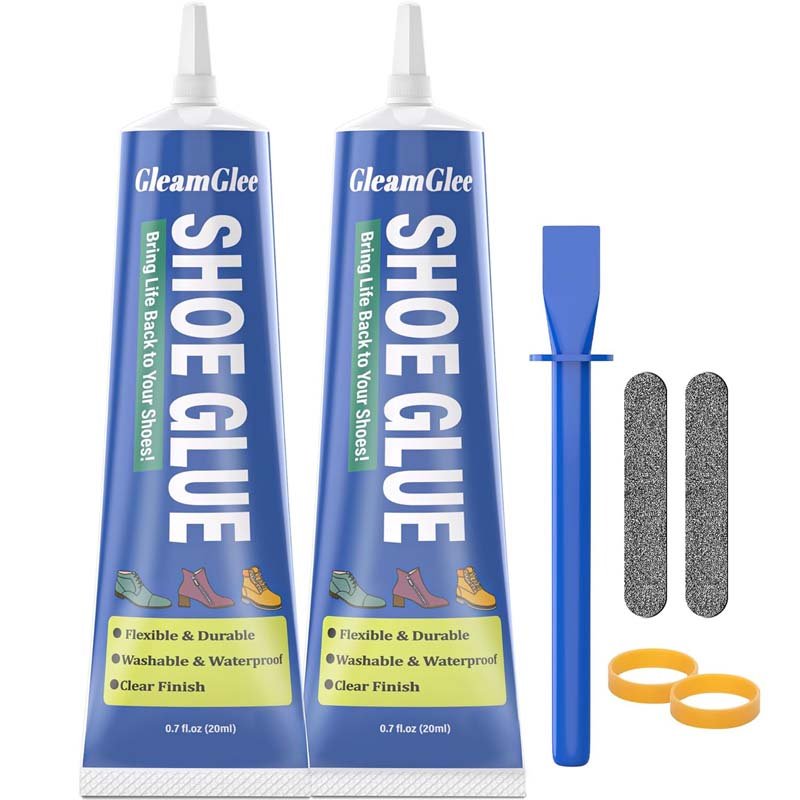
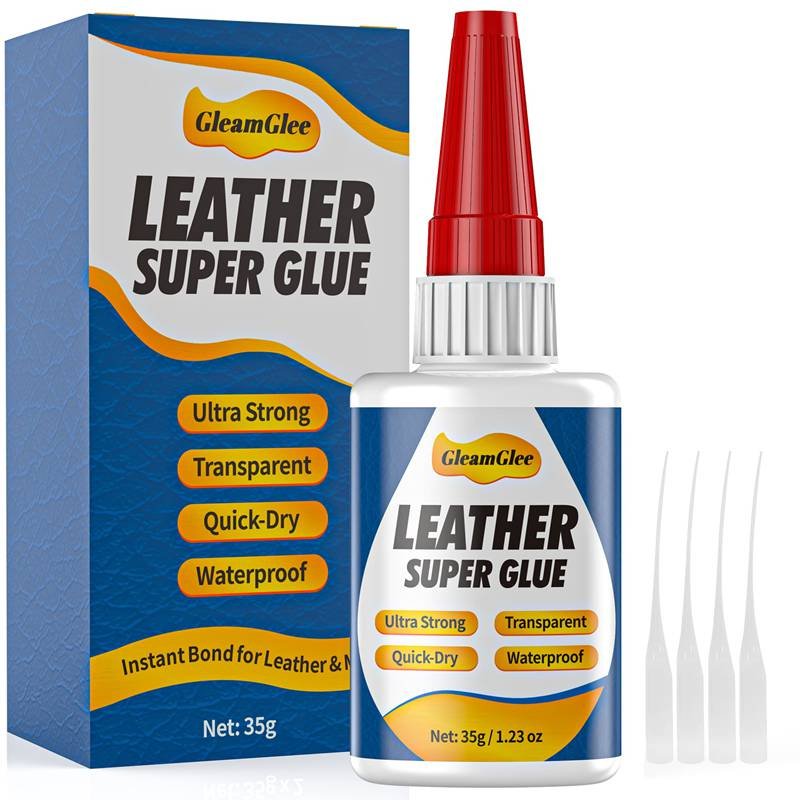
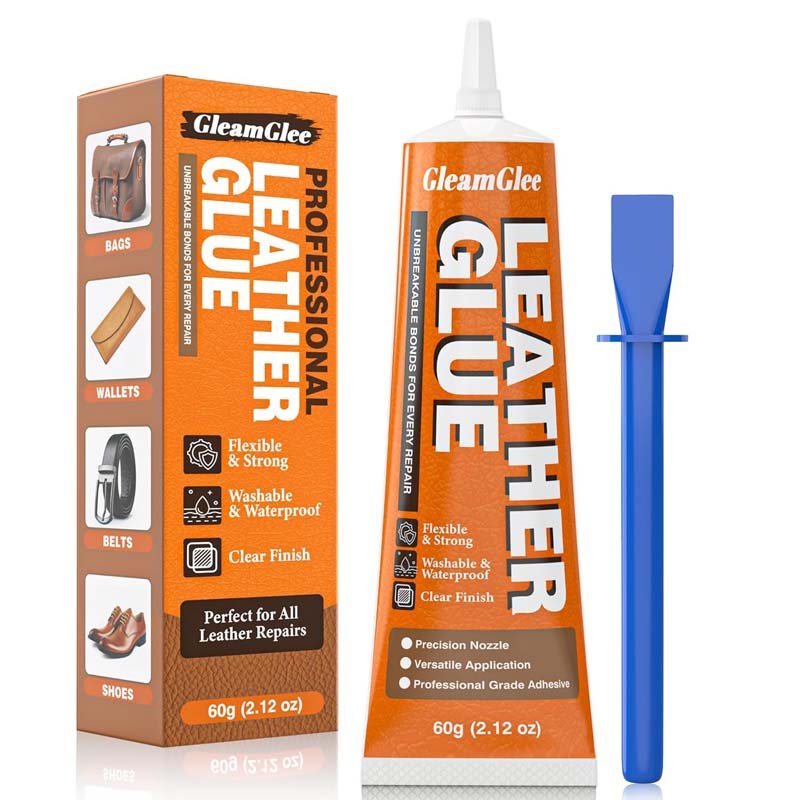
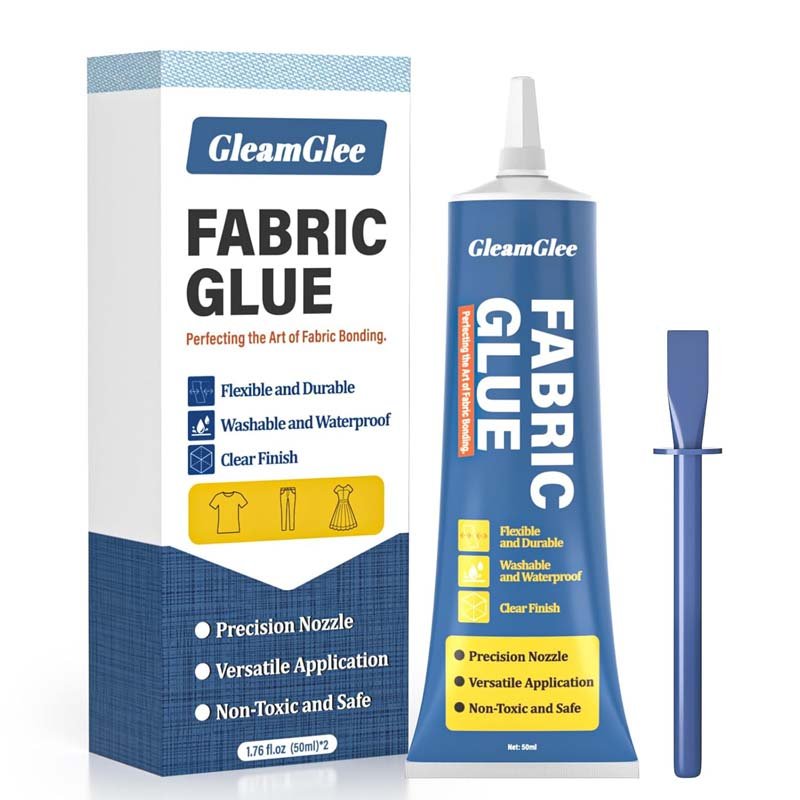
GleamGlee shoe and leather glue is engineered for flexible sole bonding, focusing on peel resistance rather than instant hardness. After curing, the bond remains elastic, helping reduce edge lifting caused by repeated walking and toe bending.
The medium-viscosity formula allows controlled application, and the metal precision tip supports clean edge repairs. It performs consistently on rubber, PU, TPU, and leather soles, especially for daily-wear shoes exposed to moisture.
Beyond consumer use, GleamGlee also offers OEM and private-label supply with stable batch control, making it suitable for both home repairs and professional resale.
Best for: Long-term flexible repairs, daily-wear shoes
Value note: Mid-range price with professional-grade performance
3. Barge
Typical Price: USD $9–15 (quart / small cans vary)
Barge Cement is widely used by professional cobblers for leather-to-leather and leather-to-rubber bonding. It delivers strong contact adhesion but requires careful surface prep and solvent handling, which may be challenging for beginners.
Best for: Professional leather shoe repair
Less ideal for: Casual DIY users
4. E6000
Typical Price: USD $5–9 (1–2 oz)
E6000 offers flexibility and broad material compatibility. It can handle small shoe sole repairs but has a longer cure time and noticeable odor. Best suited for controlled, well-ventilated use.
Best for: Small-area flexible bonding
Trade-off: Slower curing, strong smell
5. Gorilla
Typical Price: USD $6–12 (varies by formula)
Gorilla offers multiple glue types, but many are optimized for rigid bonding. Some flexible variants can work for light sole repairs, though performance under repeated flex varies by product selection.
Best for: Non-critical or temporary repairs
Risk: Wrong variant may turn brittle
6. Loctite
Typical Price: USD $6–14 (small tubes)
Loctite adhesives are known for consistency and quality. Certain flexible formulas can work on shoe soles, but users must select carefully—many variants are designed for rigid applications.
Best for: Controlled repairs with correct formula
Risk: Brittle failure if misused
7. Angelus
Typical Price: USD $7–11
Popular among sneaker customizers, Angelus glue works well for leather bonding and cosmetic repairs. Durability under heavy daily wear may vary depending on application area.
Best for: Sneaker customization, leather uppers
Less ideal for: High-load sole bonding
8. ALECPEA
Typical Price: USD $4–7
ALECPEA is positioned as a budget-friendly shoe repair glue. Suitable for light repairs, but long-term flexibility and moisture resistance may be limited.
Best for: Low-cost, light-duty fixes
Trade-off: Durability
9. Tear Mender
Typical Price: USD $6–9
Primarily designed for fabric repairs, Tear Mender can bond flexible materials but is not optimized for rubber or PU soles.
Best for: Uppers, fabric areas
Not recommended for: Sole reattachment
10. Boot-Fix
Typical Price: USD $7–10
Boot-Fix emphasizes instant bonding convenience. Fast curing is useful for emergency repairs, but rapid-set adhesives often sacrifice flexibility, increasing crack risk over time.
Best for: Emergency fixes
Risk: Brittle failure under flex
Talk to Us Before You Decide
If you’re unsure which glue is right for your shoe sole repair—or you want a more reliable long-term solution—getting clarity first often saves time, cost, and repeat failure.
For Individual Users & Amazon Buyers
If you are repairing shoes at home and want predictable results, we recommend choosing an adhesive designed specifically for flexible sole bonding, not general-purpose glue.
- GleamGlee shoe and leather adhesives are available via Amazon FBA
- Clear instructions, controlled application, and realistic cure guidance
- Suitable for everyday footwear, boots, and mixed-material soles
If you’re not sure which product fits your repair, you can contact us before purchasing—we’re happy to help you choose based on your shoe type and usage.
For Brands, Sellers & Bulk Buyers
If you are:
- An Amazon or eCommerce seller
- A footwear brand or repair service
- A distributor looking for stable, repeatable quality
We can support you with:
- Adhesive formulation selection or customization (low MOQ)
- OEM / private label options
- Packaging, compliance, and FBA-ready logistics
- Consistent batch performance across scaling volumes
Our role is to help you reduce failure rates and customer complaints, not just supply adhesive.
How to Reach Us
You can reach our technical and commercial team directly:
- Email: service@gleamglee.com
- Global fulfillment: USA / UK / Germany / Canada warehouses
- Samples & technical discussion: Available upon request
When contacting us, it helps to share:
- Shoe type and sole material
- Repair area (toe, edge, heel)
- Usage pattern (daily wear, outdoor, work use)
This allows us to give practical, accurate guidance—not generic advice.